

PRO


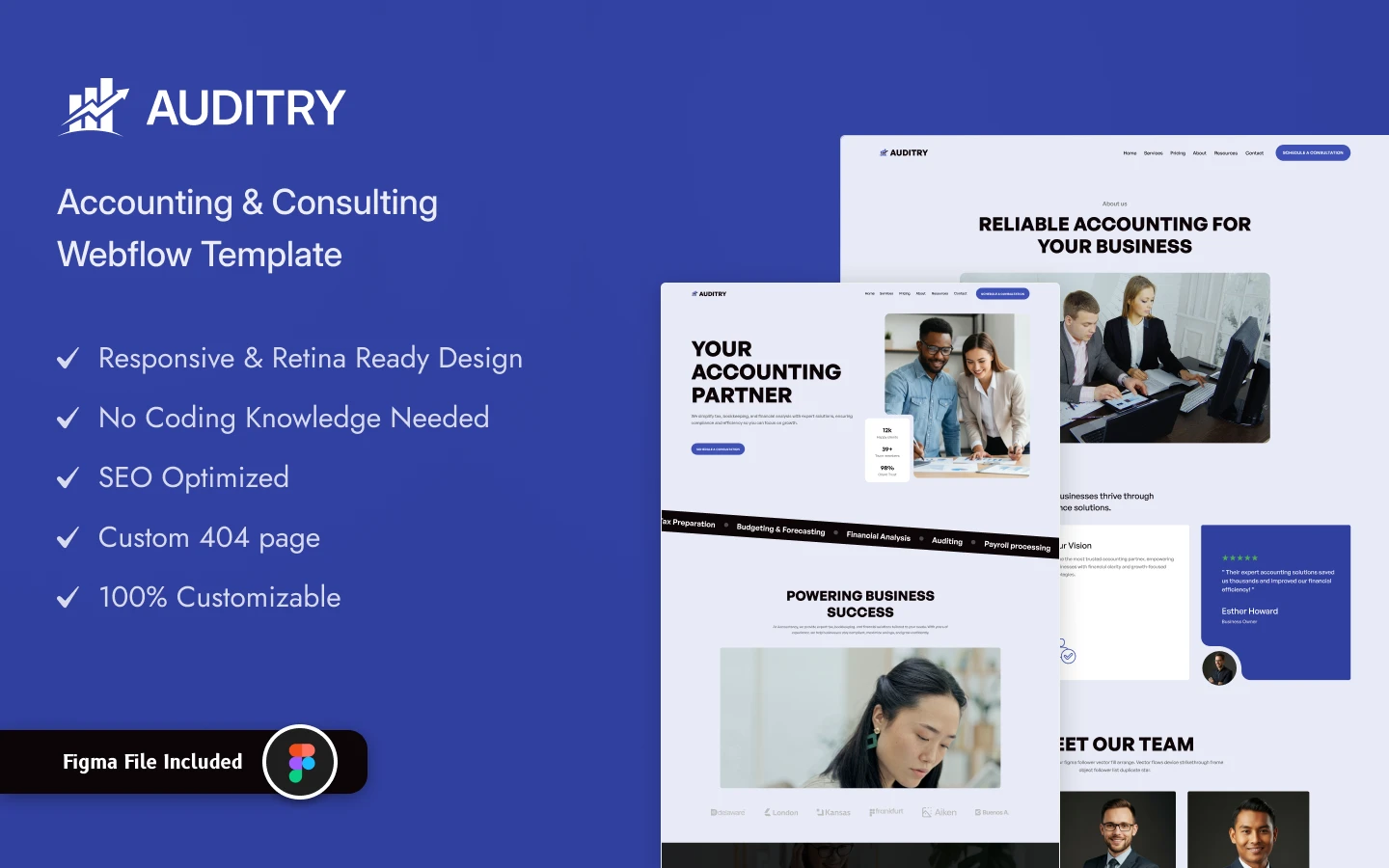
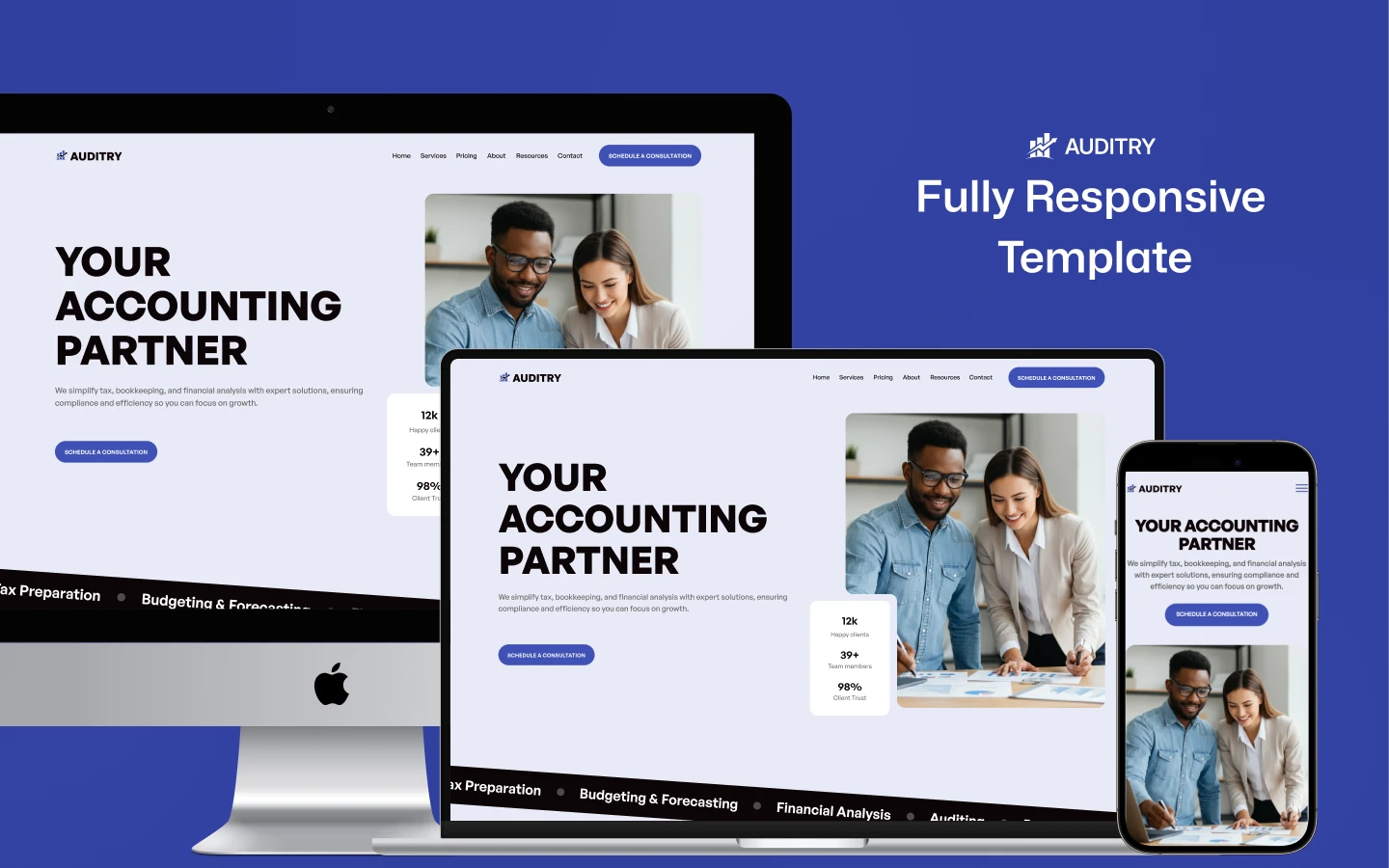
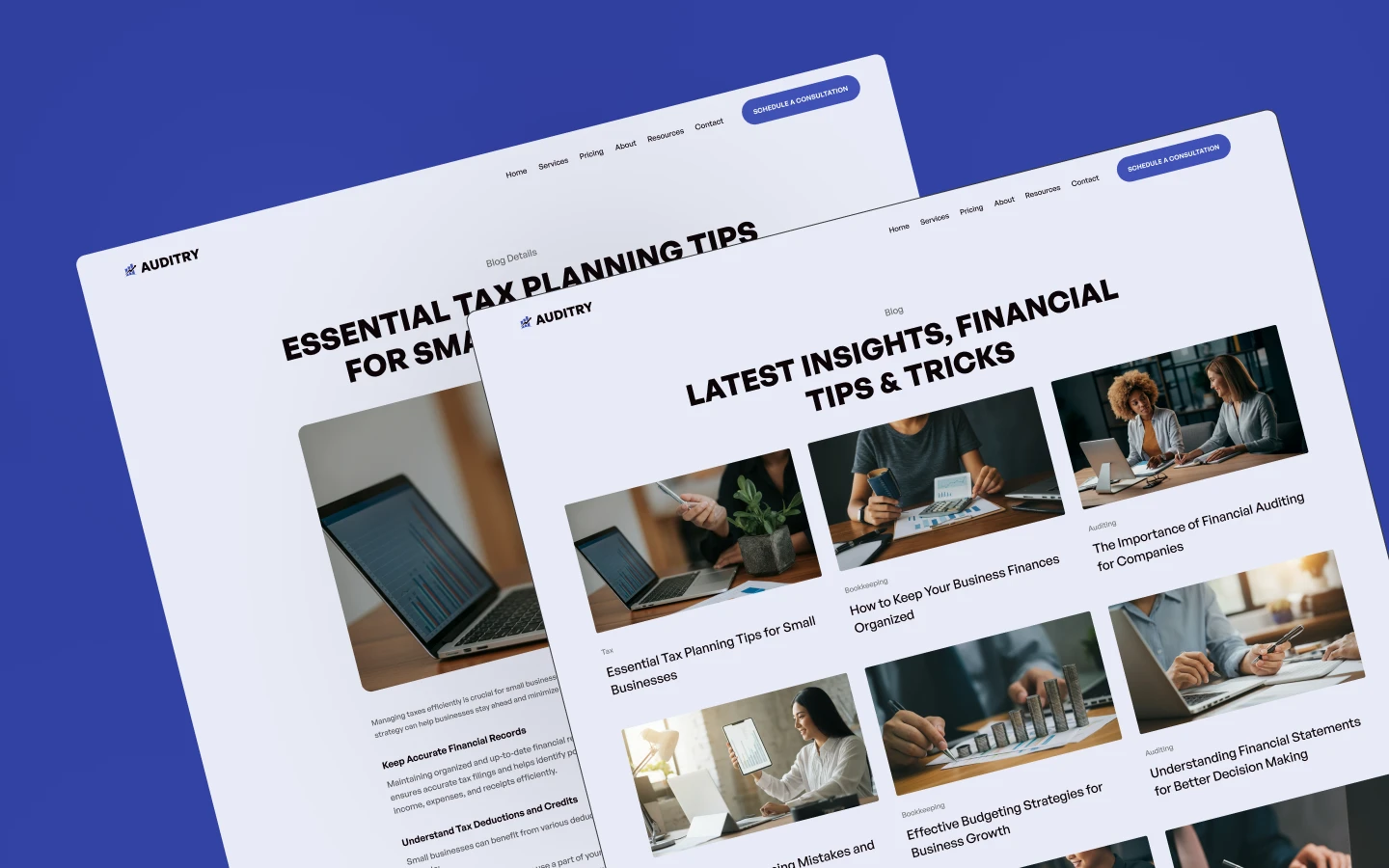
Auditry is an accounting website template for accountants, bookkeepers and financial advisory firms. It ships for Webflow, Figma and HTML.
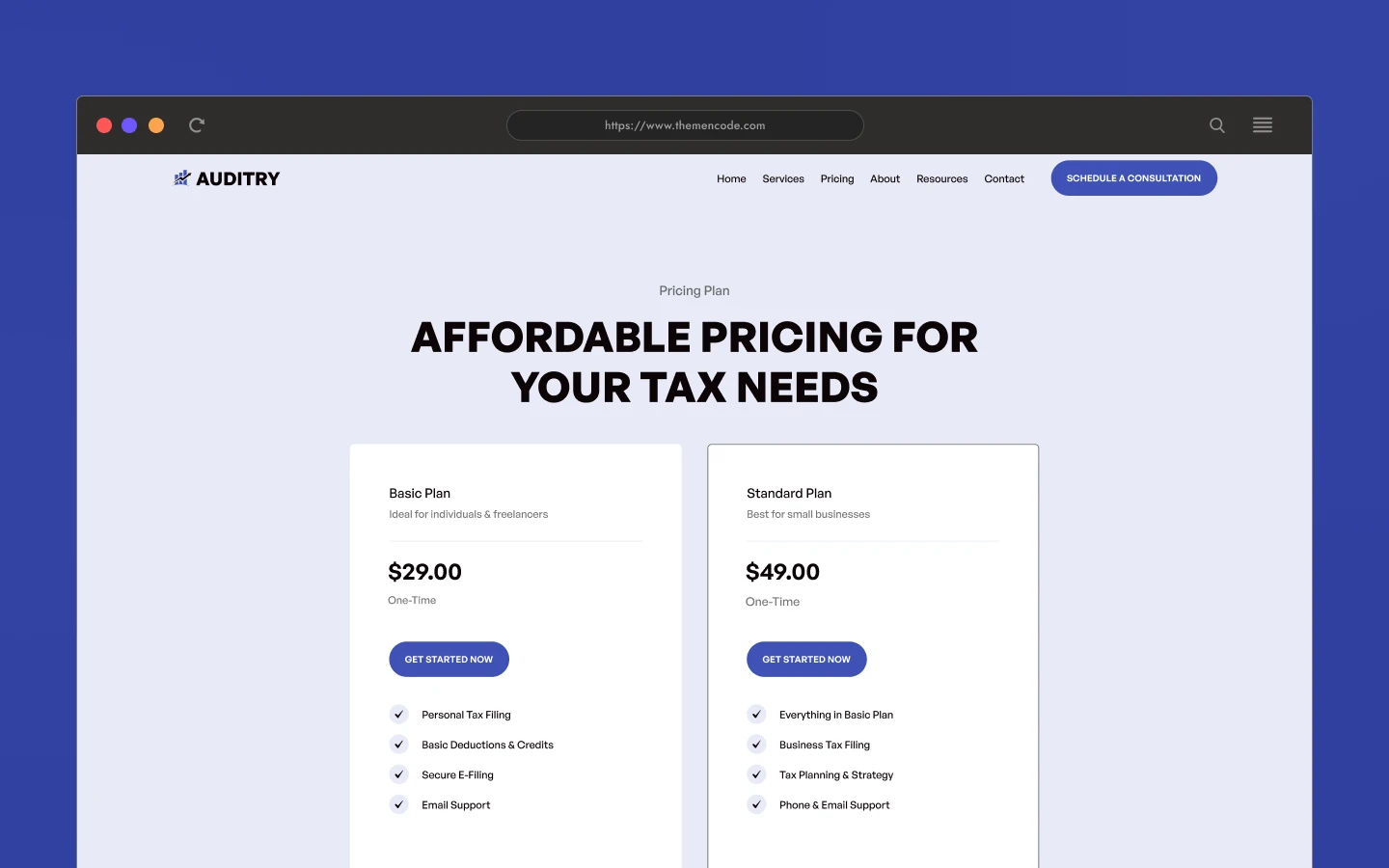
The structure follows how a practice actually sells. So the home page states the specialism, the services library covers each engagement type, and the consultation page books the first call. Because fees are a common objection, a pricing plan page is included too.
Every section has one job. The hero names the discipline. Then the services grid explains each offering. After that, the team profiles establish who will handle the work. Finally, the consultation and contact pages capture the enquiry.
Four CMS collections carry the content. Services, team members, blog posts and blog categories each have their own template, so the site grows without new design work.
Explore the live preview now.
Auditry at a Glance
| Formats | Webflow, Figma and HTML |
| Best for | Accountants, bookkeepers, auditors, tax advisers and financial consultants |
| CMS | Yes, with Services, Team Members, Blogs and Blog Categories collections |
| Pages | 15, including 4 CMS templates plus 404 and password screens |
| Responsive | Yes, on desktop, tablet and mobile |
| Support | Direct help from the TNCFlow team |
Key Features of Auditry
Built for financial practices. The page set matches how an accounting firm presents itself. So you get a services library, a team page, a pricing plan and a consultation booking flow without designing them yourself.
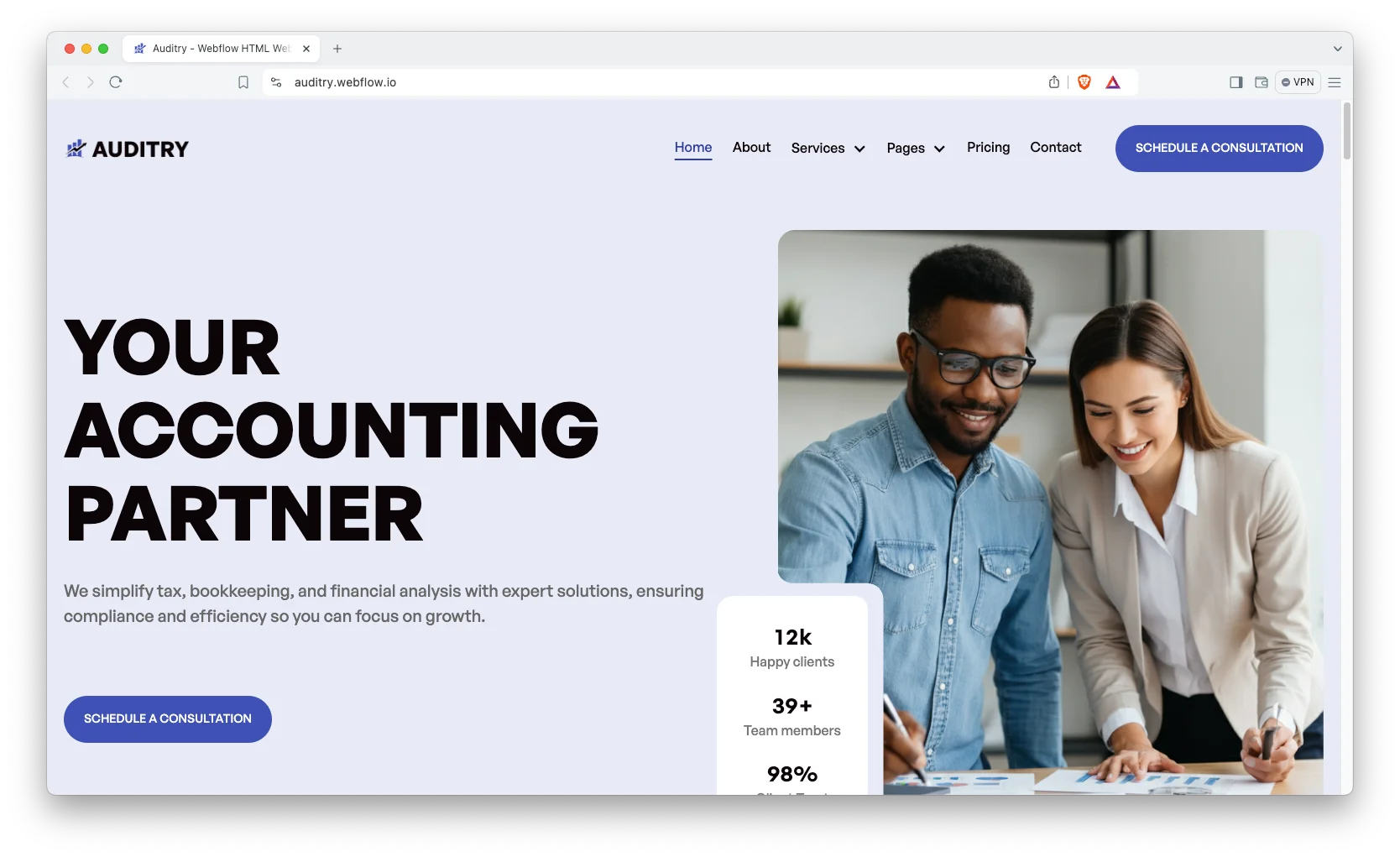
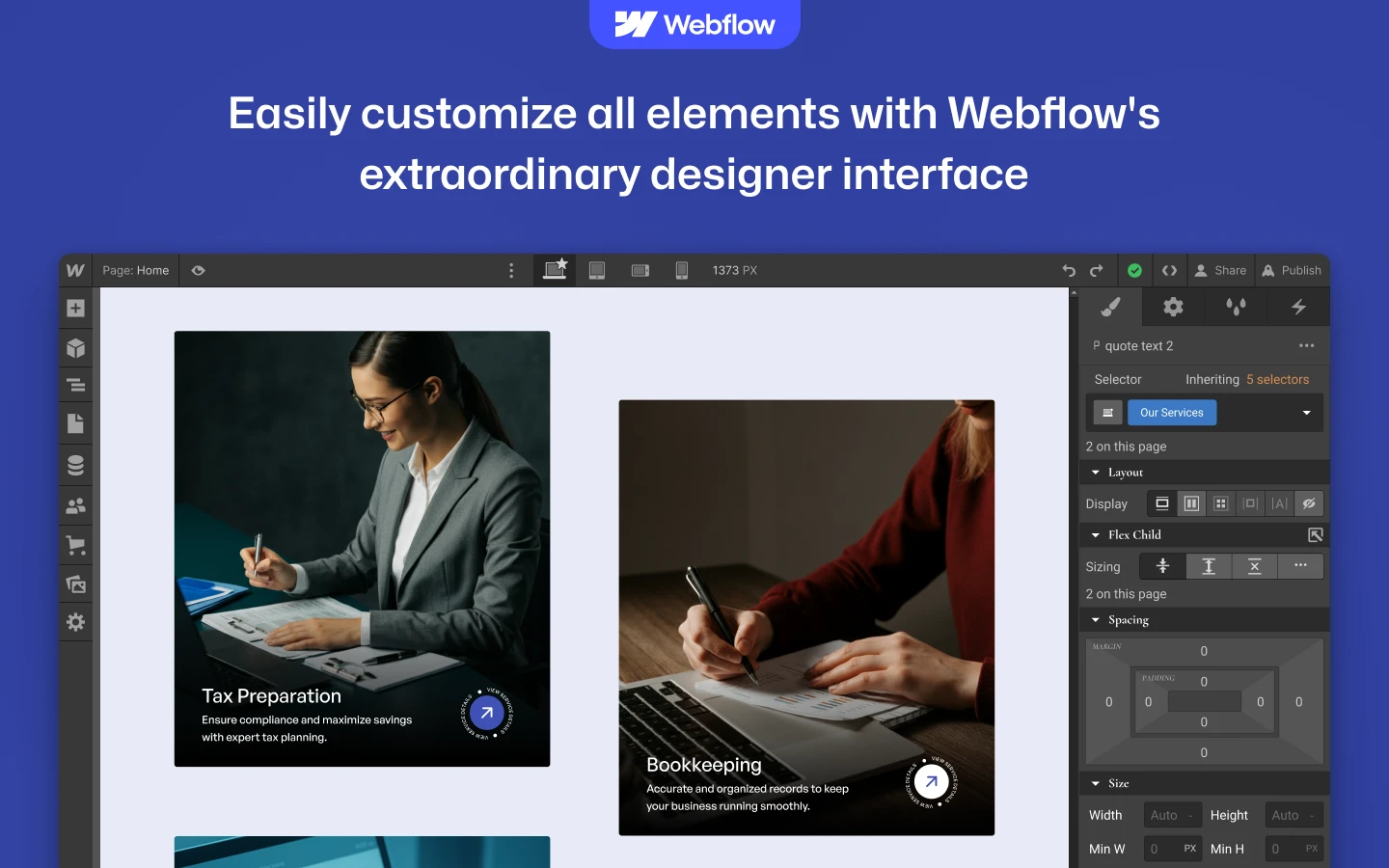
CMS included. Auditry runs on Webflow collections. That way you can publish a new service, a team member or an article from the editor alone.
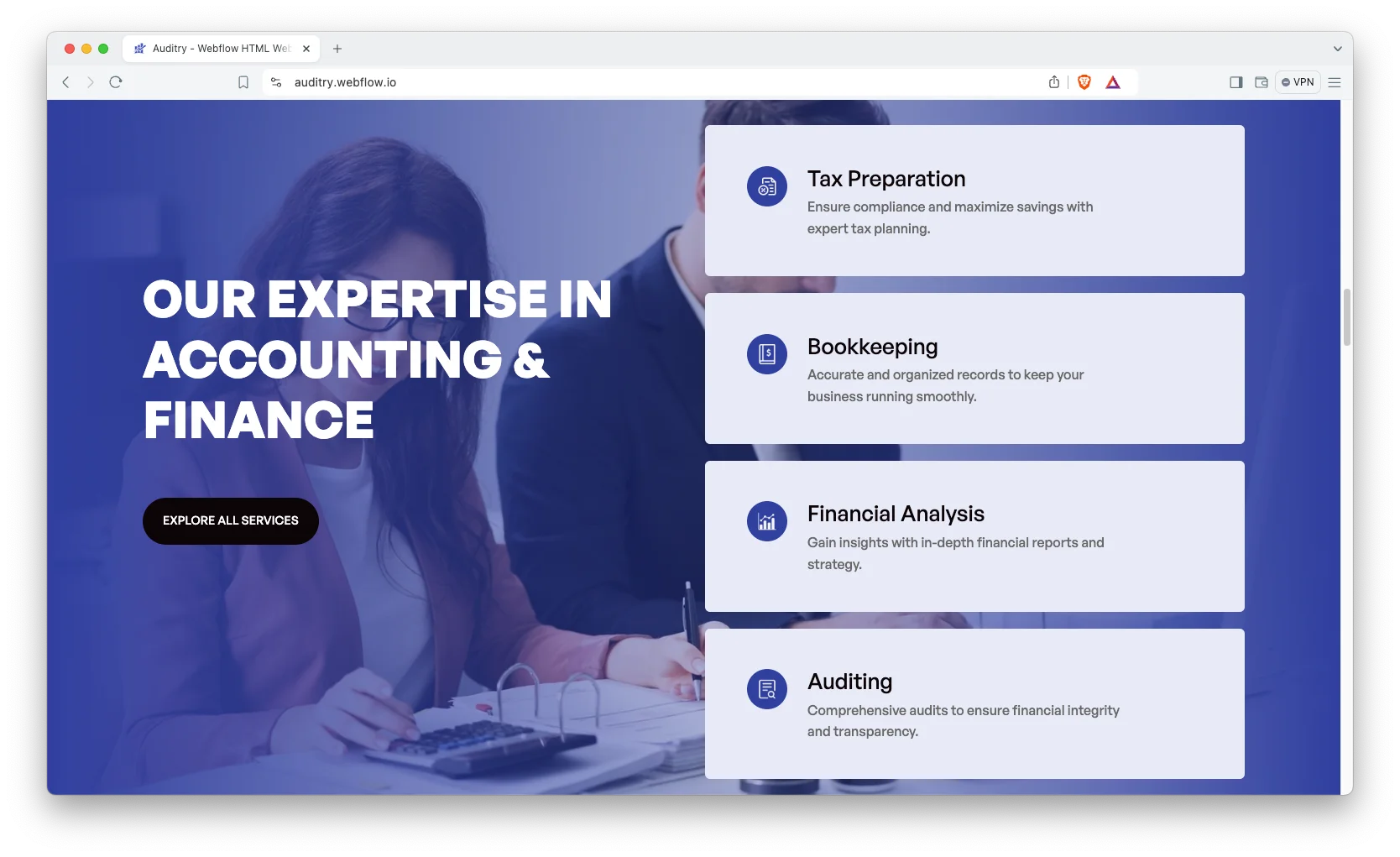
Responsive and premium design. The style is minimal and restrained. Because financial buyers are assessing competence, the layout favors clarity over decoration.

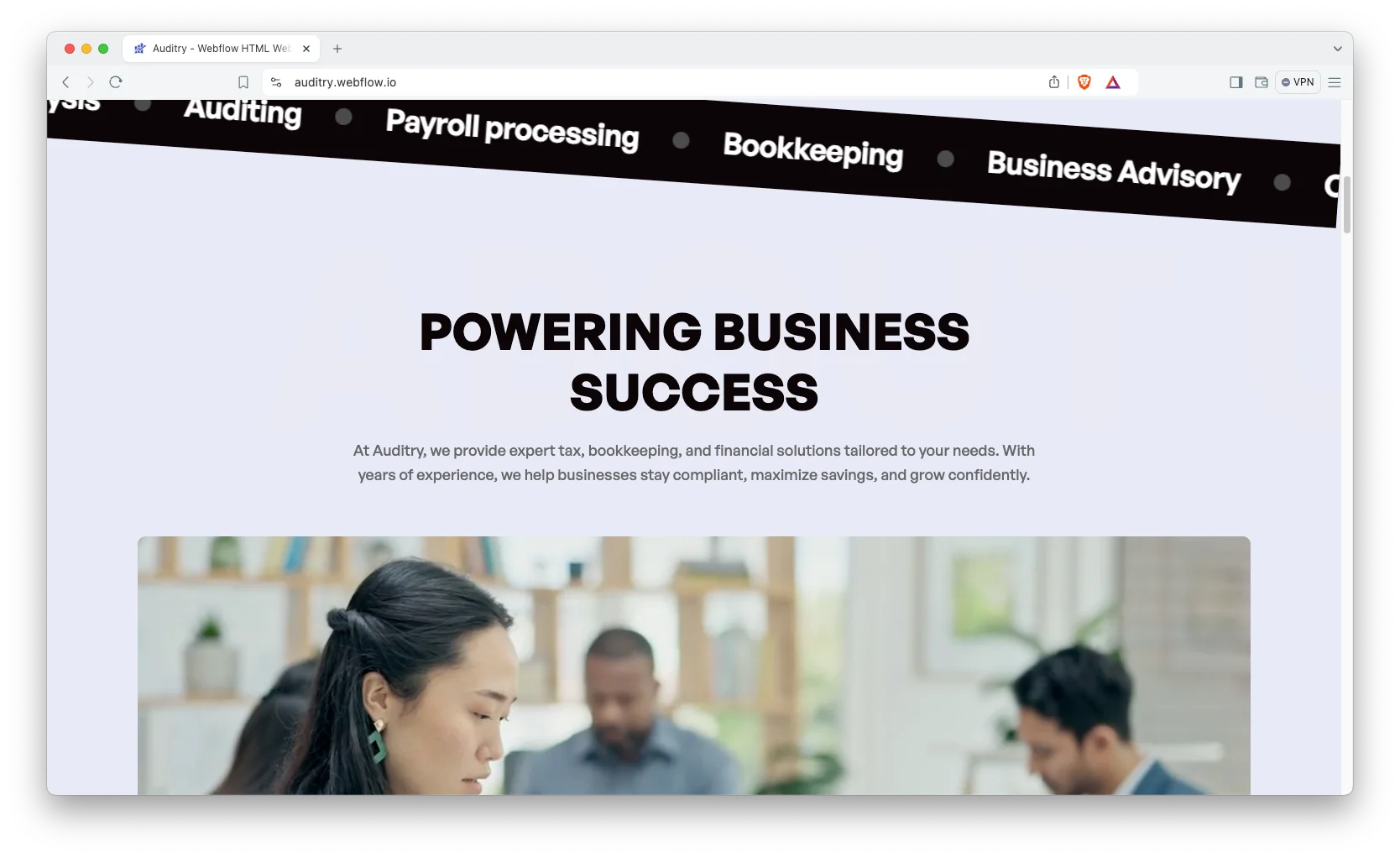
Services showcase. Each service gets its own page. So tax preparation, bookkeeping, financial analysis, auditing, payroll processing, budgeting and forecasting, business advisory and compliance reporting are all documented separately.
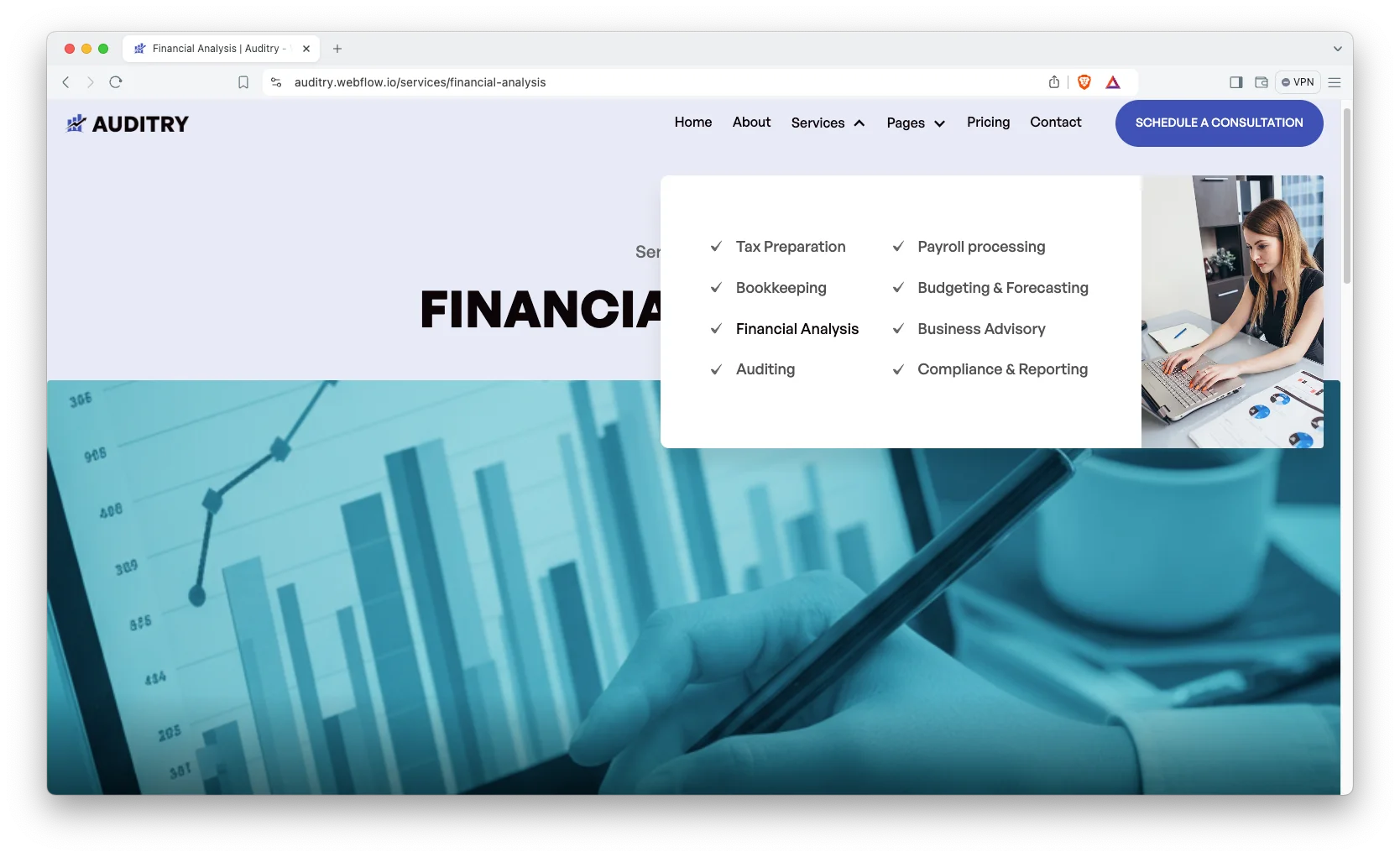
Consultation scheduling. A dedicated consultation page handles the first meeting. So a prospect can request a call without hunting for an email address.
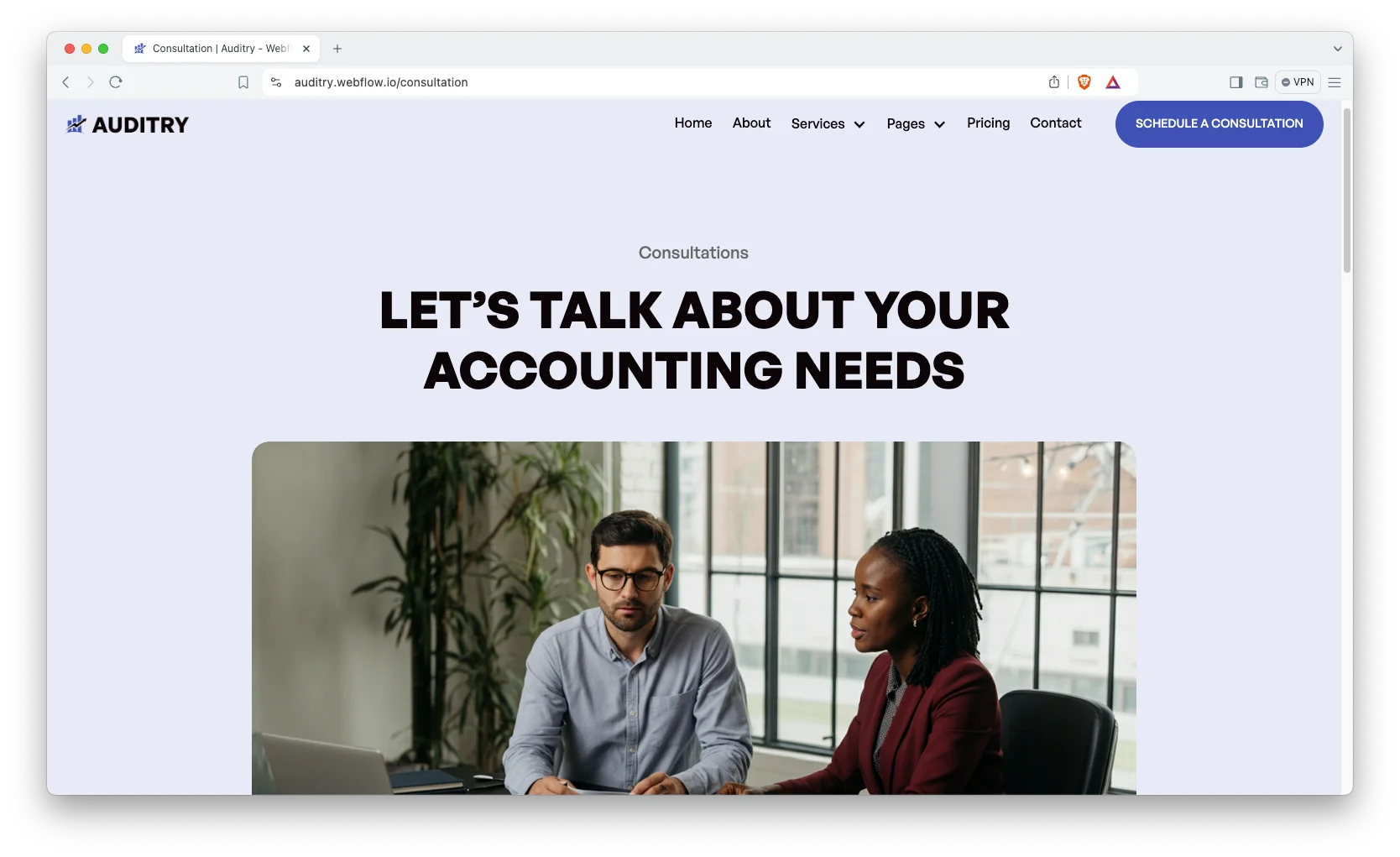
Team showcase. Every team member has a profile page. Because clients want to know who will handle their accounts, this section does genuine selling work.

Animation, video and sliders. Motion stays subtle throughout. However, it is useful when you want to walk a visitor through a service or highlight a client result.
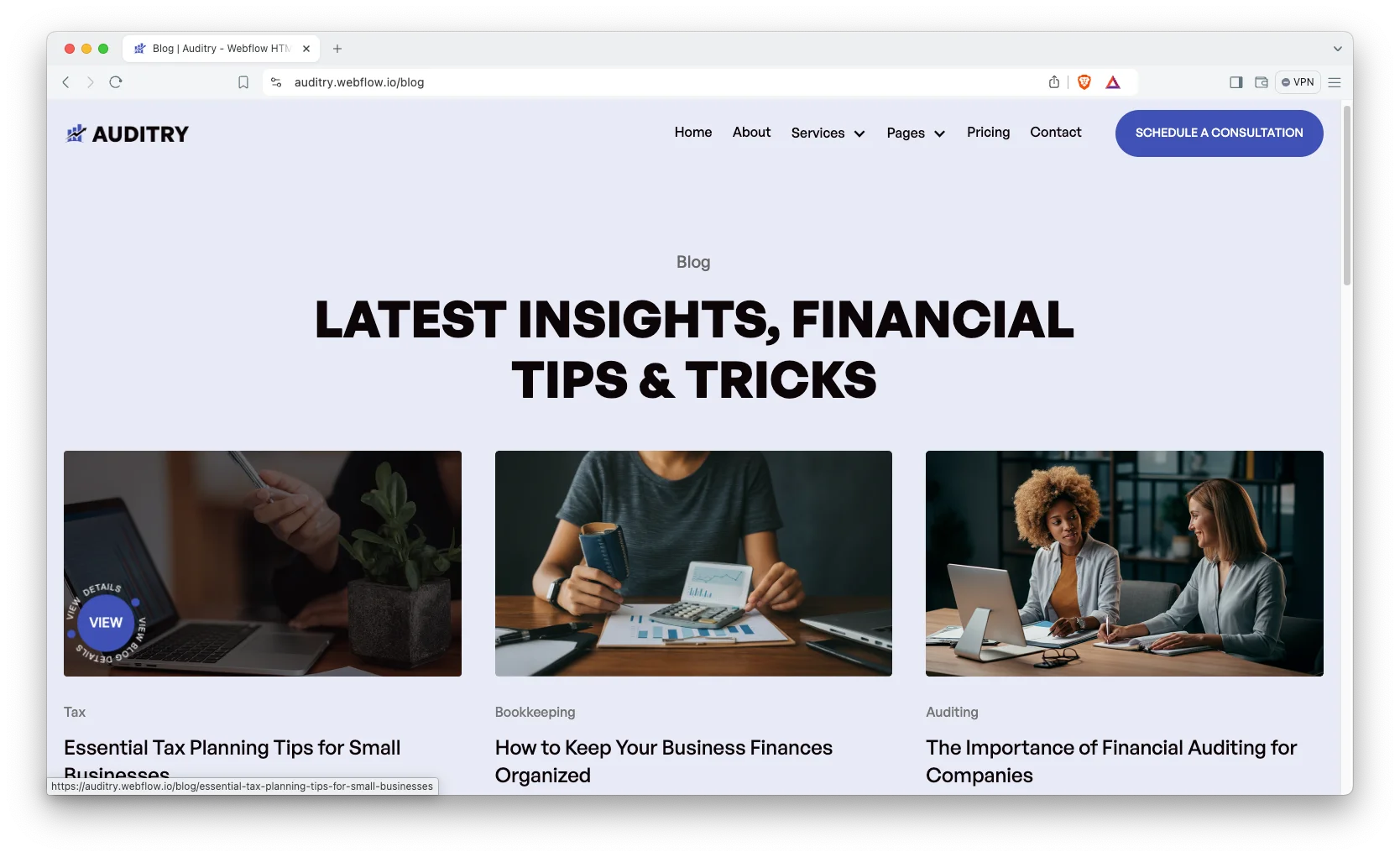
Blog showcase. The blog index is built for scanning. Readers see the title, the category and the image, then click straight through to the article.
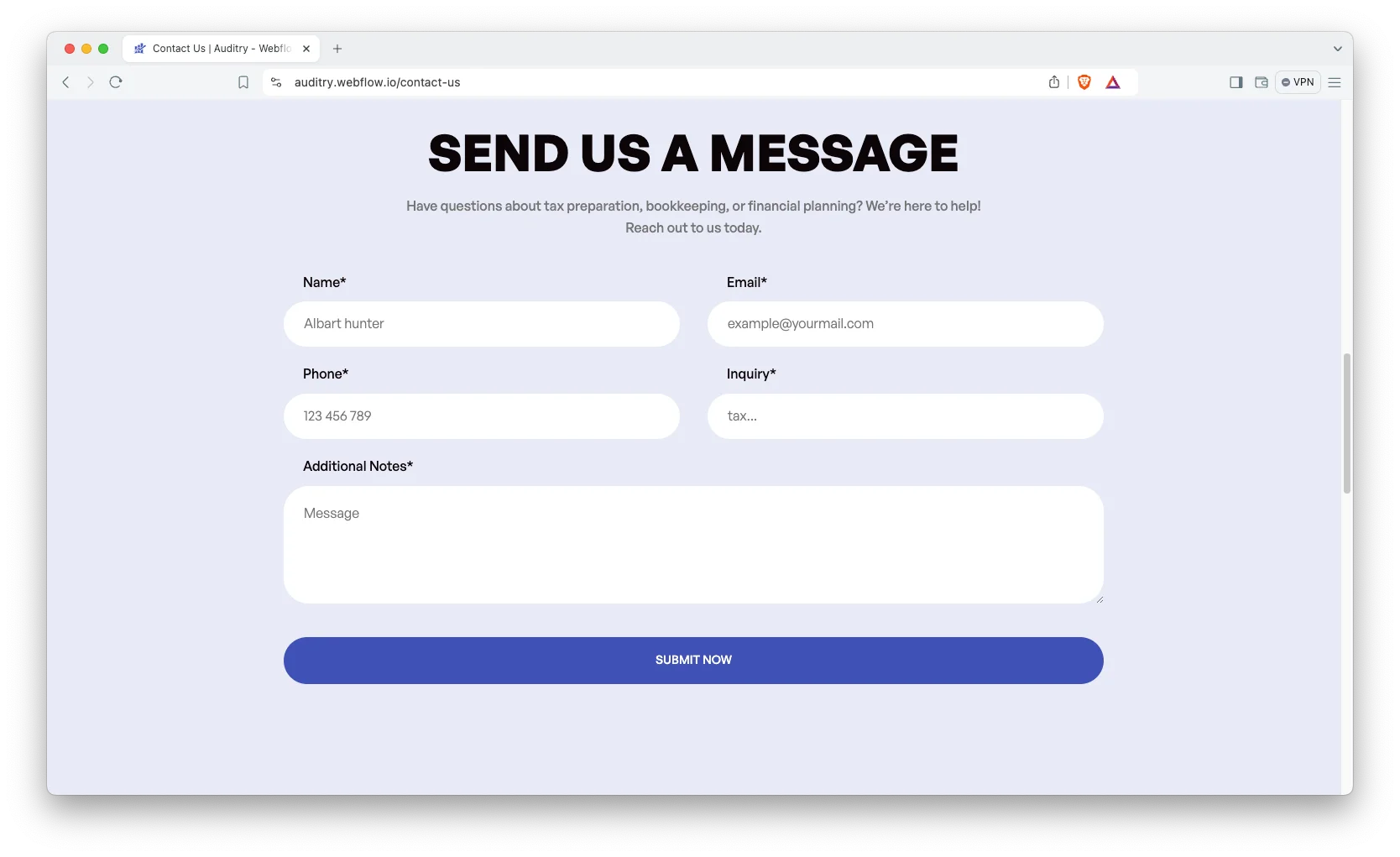
Contact details. The contact page shows the address, the phone number and an interactive map. That way a new client can reach the office without guessing.
Watch on YouTube
Watch the video walkthrough if you want a quick tour. It steps through the pages and the CMS in a few minutes.
Pages Included in Auditry
- Home
- About
- Services
- Consultation
- Blog
- Pricing Plan
- Contact Us
- Team
- Utility
- Team Members Template (CMS)
- Blogs Categories Template (CMS)
- Blogs Template (CMS)
- Services Template (CMS)
- 404
- Password
How to Use Auditry
- Use the purchase widget on the right side of this page to buy the Auditry template
- Follow the setup steps to get your site ready
- Replace the demo content with your own copy and photos
- Adjust colors and type to match your firm branding
- Preview the site, then publish
What an Accounting Firm Website Has to Prove
Accounting is a trust purchase, not an impulse one. So the site has to answer a specific question early: can this firm handle my situation?
Start with the service pages. A sole trader, a growing company and a charity need different things. Because of that, one combined services page will always underperform against a page per engagement type.
Next, name the people. Accountancy buyers want to see qualifications, memberships and years in practice. A team page with real profiles beats a stock photo every time.
Then be clear about fees. You do not have to publish exact prices. However, a pricing plan page that explains the tiers removes the biggest reason a visitor leaves without contacting you.
Finally, publish useful writing. Filing deadlines, allowance changes and bookkeeping basics are all searched constantly. That is where the blog and its category structure earn their place.
Auditry Frequently Asked Questions
Is Auditry a Webflow template?
Yes. Auditry ships as a Webflow template, and it also comes as a Figma file and as a static HTML build. Each format is sold separately, so you buy only the one you need.
Does Auditry include a CMS?
Yes. The Webflow version includes four CMS collections: Services, Team Members, Blogs and Blog Categories. So you can publish new services, staff profiles and articles without touching the design.
How many pages does Auditry include?
Auditry includes 15 pages. That covers Home, About, Services, Consultation, Blog, Pricing Plan, Contact Us, Team and Utility, plus four CMS templates and the 404 and password screens.
Can I use Auditry for a consulting or law firm?
Yes. The structure suits any professional services firm. So a consultancy, a legal practice or a financial advisory business can reuse the same service, team and consultation pattern.
Do I get the Figma file when I buy the Webflow template?
No. The Figma file is a separate product with its own price. If you want the design source as well, buy the Figma version alongside the Webflow one.
Does Auditry work on mobile?
Yes. Every page is built for desktop, tablet and mobile. Because many enquiries start on a phone, the mobile layout was treated as a first-class view.
If you get stuck, the TNCFlow support team can help. Send a message and we will answer quickly.
Check out other Webflow templates by TNCFlow.
Featured in our guides: consulting website templates, Webflow finance templates and lawyer website templates.

Select template
Choose one or more options for your build
