

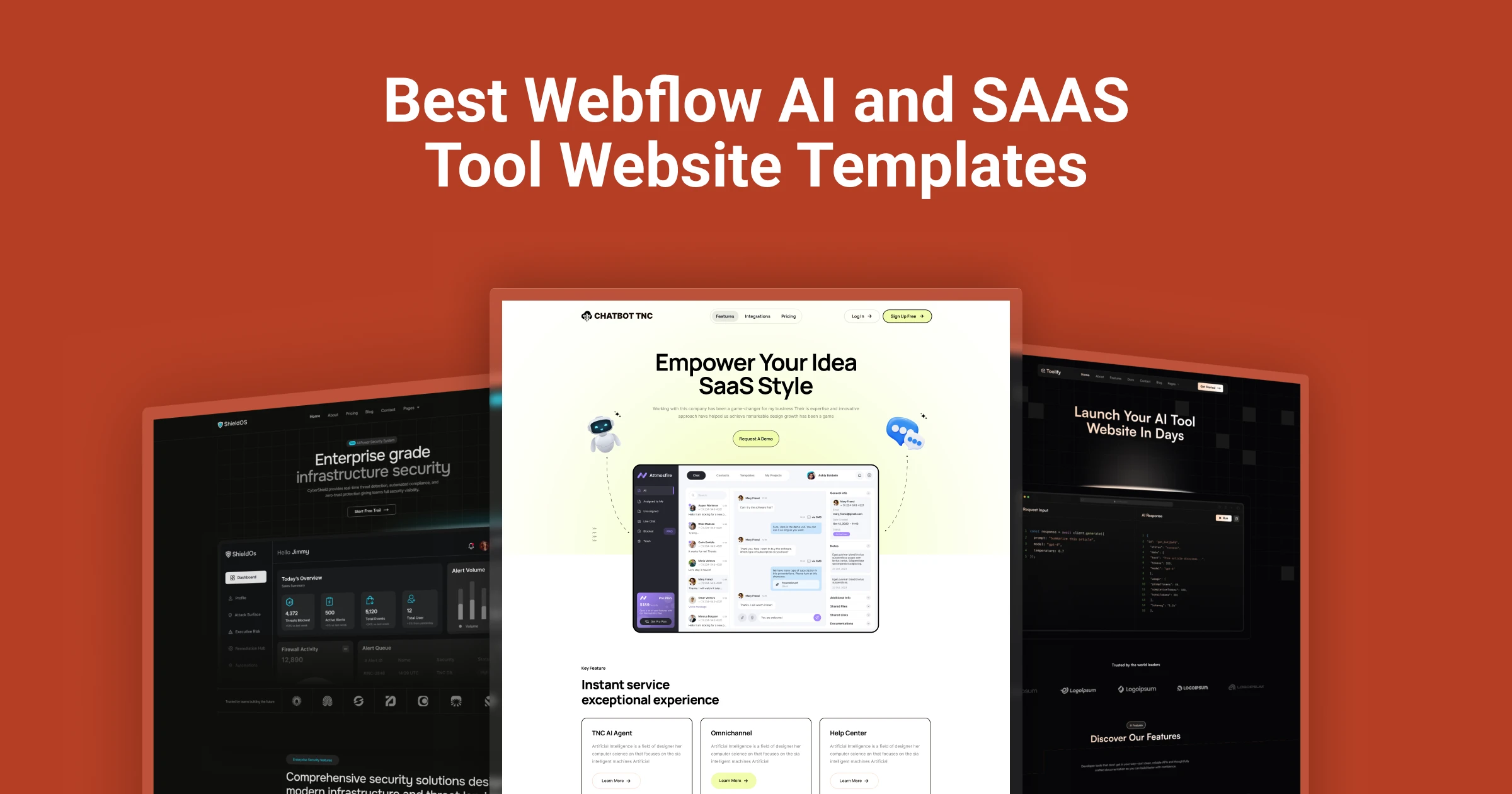
AI products have a specific marketing problem. The category is crowded, the claims all sound alike, and most visitors cannot tell from a homepage whether your tool does something genuinely useful or wraps a model in a nicer interface.
The sites that work solve it by being concrete: showing the product, naming the use case, and getting people into a trial quickly. These Webflow templates are structured to support that rather than to accumulate adjectives.
If you are specifically after Framer builds for this category, our Framer SaaS collection covers those.
Why Most AI Product Sites Fail
They describe capability instead of showing outcome. A page explaining that your tool is powered by advanced models tells a visitor nothing about whether it solves their problem. A page showing the tool doing one specific job well tells them immediately.
The second failure is asking for commitment too early. In a category where people are skeptical and alternatives are a click away, the site’s job is usually to get someone to try the thing, not to sell them an annual plan on the first visit.
What an AI or SaaS Template Needs
Look for structure that supports demonstration:
- Room to show the product, through screenshots, embedded video or an interactive demo.
- Use-case sections rather than only feature lists, since buyers recognize their own situation faster than they parse capabilities.
- A clear trial or signup path that does not require a sales conversation first, unless your product genuinely warrants one.
- Pricing presented plainly. Hidden pricing loses self-serve buyers.
- Documentation or developer sections if your users are technical.
The Webflow AI and SaaS Templates
Each is a Webflow build. Figma, HTML and in some cases Framer versions exist for several.
Toolify
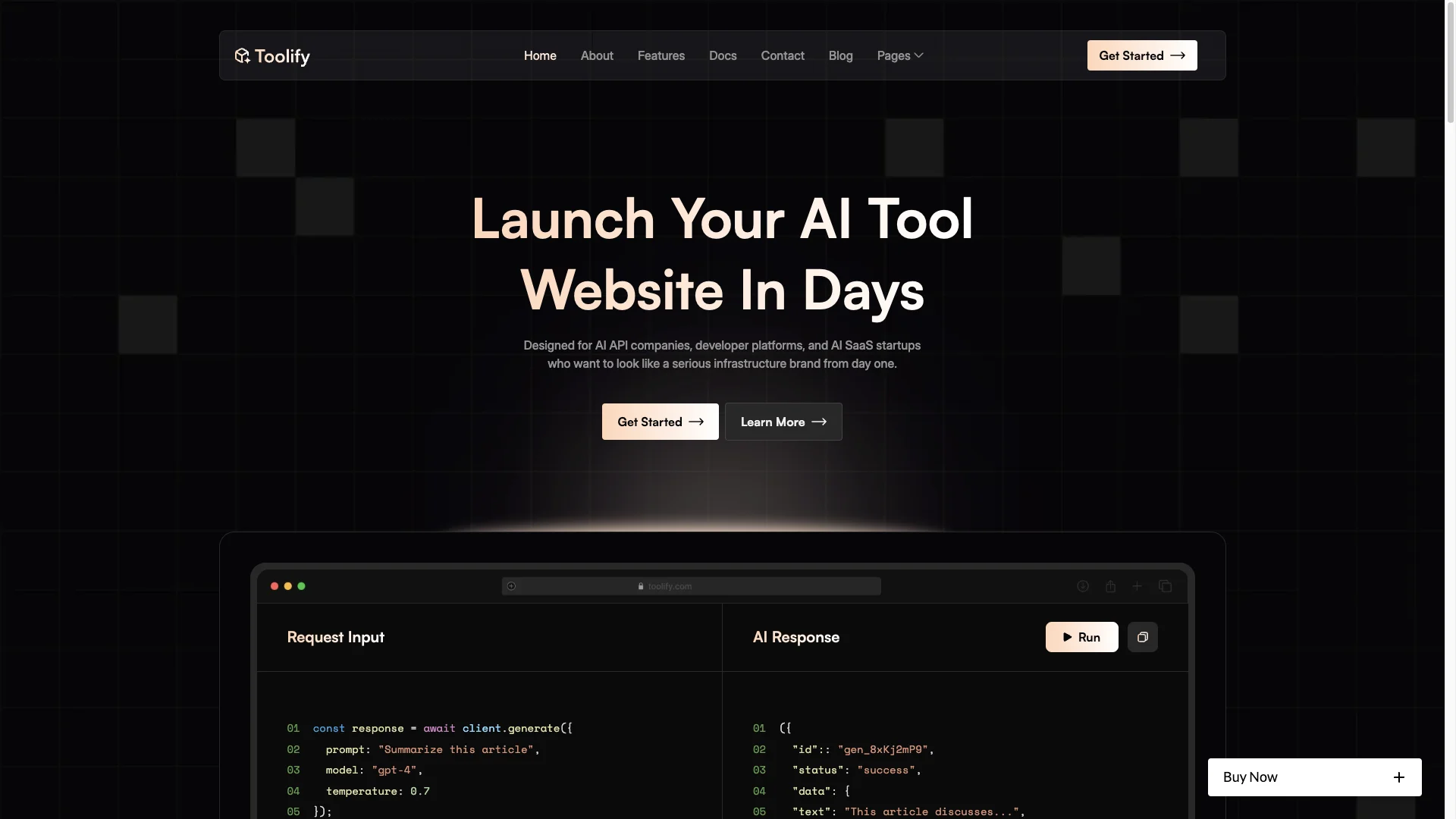
Toolify is built for AI tools and developer products, with the structure a technical product needs including capability explanation, use cases and a direct route to trying it.
Note that Toolify is sold in Framer and Webflow builds. Check which you are previewing before purchase, as the two are not interchangeable.
Toolify is available now.
Aiwrite

Aiwrite is an AI writing and content tool layout, oriented around a free trial as the primary conversion.
Suits products where the fastest route to a sale is letting someone use it.
Aiwrite is available now.
Aixus

Aixus is a broader AI product layout with more room for multiple capabilities and audiences than Aiwrite.
Better for platforms with several distinct use cases to communicate.
Aixus is available now.
Chatbot TNC
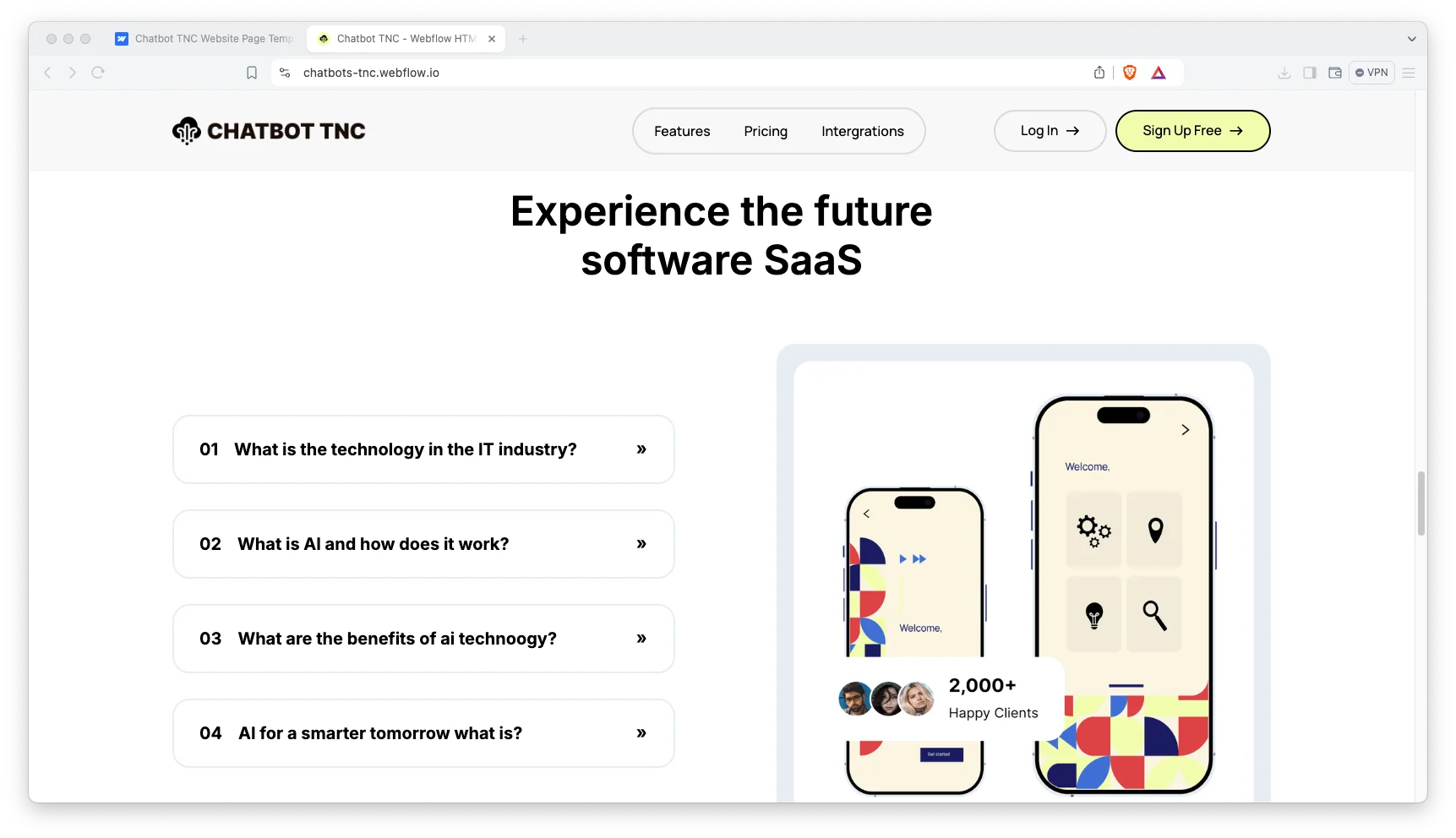
Chatbot TNC covers conversational AI and support automation, with structure for explaining a product that buyers may not have deployed before.
The explanation-led approach suits anything requiring integration into existing workflows.
Chatbot TNC is available now.
SalesAi TNC

SalesAi TNC is a sales-tool layout leading with outcomes rather than features, with proof placed beside claims.
Direct and commercial, suited to B2B tools sold on measurable results.
SalesAi TNC is available now.
Nocomation
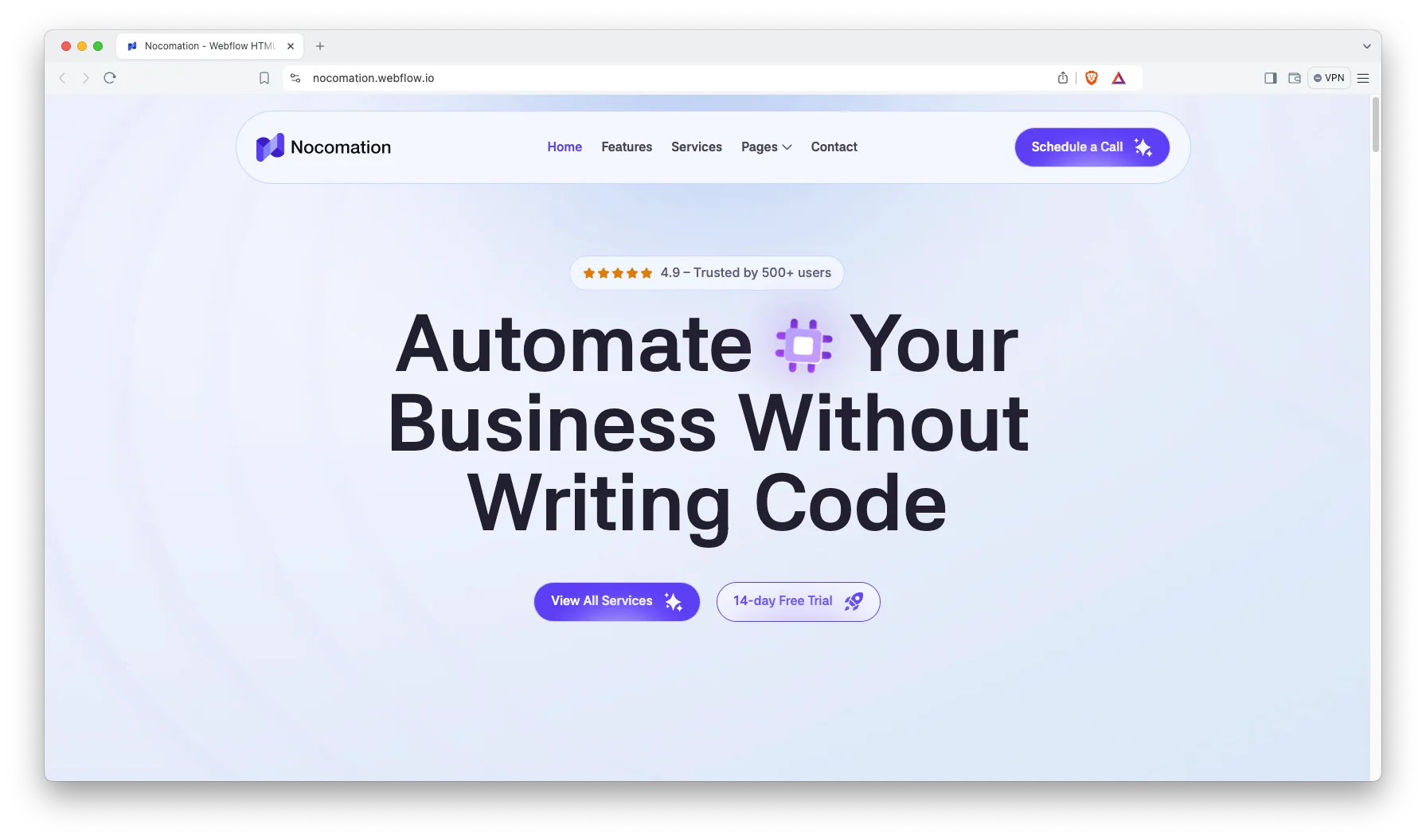
Nocomation covers automation and no-code platforms, assuming an audience that needs the concept explained as well as the product.
Strong on process explanation, which matters for tools that change how someone works.
Nocomation is available now.
ShieldOS
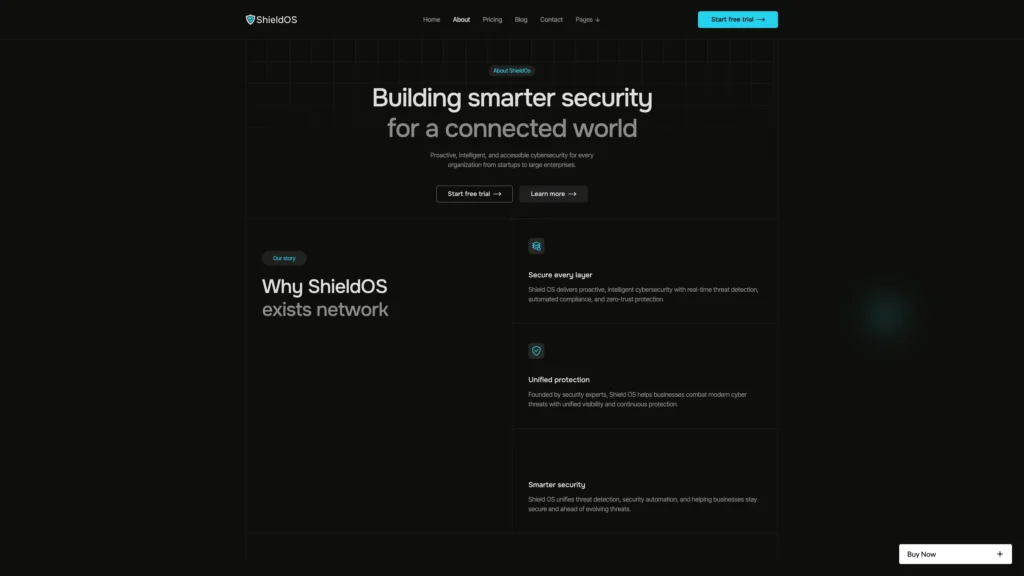
ShieldOS is a cybersecurity product layout where credibility and technical specificity matter more than visual flair.
Suits security tooling and any product sold to risk-averse technical buyers.
ShieldOS is available now.
A Note on Claims
AI marketing has a credibility problem, and a large part of it is unsubstantiated performance claims. Specific accuracy figures, time savings and productivity improvements are easy to write and hard to defend, and technical buyers discount them automatically.
If you have real numbers from real usage, use them and say where they came from. If you do not, describe what the product does rather than inventing a statistic. This is genuinely better marketing to a technical audience, not merely more honest.
The same applies to what your product actually is. If it is built on a third-party model, sophisticated buyers will work that out, and having implied otherwise costs more than the disclosure would have.
How to Choose the Right One
Choose based on how technical your buyer is. Developer-focused products need documentation, specificity and less persuasion. Products sold to business users need use cases, outcomes and more explanation of the concept itself.
Then make sure you can actually show the product. The single biggest weakness in AI product sites is having nothing concrete to display. If your screenshots are not ready, that is worth solving before the site. Pricing is on the pricing page.
Frequently Asked Questions
Can I embed an interactive demo of my product?
Yes. Webflow supports custom code and embeds, so you can include a demo, video walkthrough or interactive element. Watch the effect on page speed, since heavy embeds are the usual cause of slow product pages.
Do these templates include pricing tables?
Most do. Presenting pricing clearly is standard for self-serve products, and the tables can be adjusted to your tiers without touching the design.
Can I add a documentation section?
Yes, using Webflow collections. For very large documentation sets, a purpose-built documentation platform linked from the site is often more comfortable than managing it in Webflow.
Is Webflow suitable for a SaaS marketing site?
Yes, and it is a common choice because marketing teams can update it without engineering time. The application itself would be built separately, with the marketing site linking into it.
Can I run the app and the marketing site on the same domain?
Usually with the app on a subdomain, which is the standard arrangement. Serving both from the same root domain is possible but adds complexity for little benefit.
Can you build and customize the site?
Yes. Our Webflow customization service covers it. Request a quote with your product details.
Start Building
Browse the full catalog or the Framer collection for Framer builds.
For a product site built around your demo and trial flow, see the Webflow development service.