
PRO
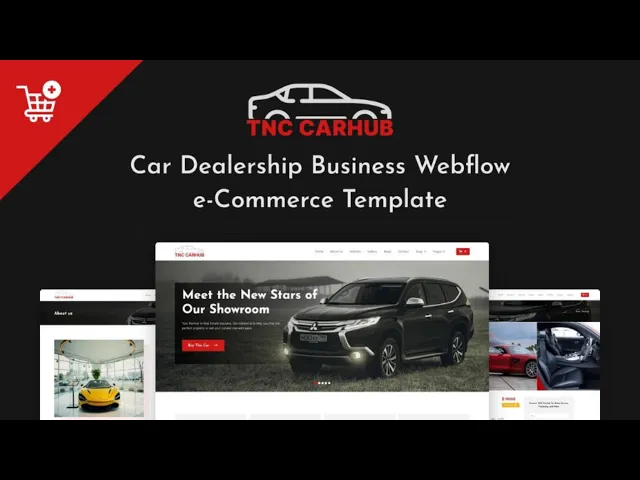


TNC CarHub is a car dealer website template for dealerships, used car lots and automotive parts retailers. It ships for Webflow, Figma and HTML.
The template comes in two Webflow builds. The CMS build runs the inventory, the blog and the inquiry flow. The ecommerce build adds a parts shop with a cart, a checkout and PayPal.
Each section has a single responsibility. The hero promotes one vehicle. The Vehicles page carries the whole stock behind brand and category filters. Then the detail page lists the specification, and the testimonials answer the trust question.
Because the Webflow CMS drives cars, brands, categories and articles, you list a vehicle once. After that, every brand page, category page and search result updates itself.
You can examine both builds before purchasing. Check the CMS live preview or the ecommerce live preview to compare them.
TNC CarHub at a Glance
| Formats | Webflow, Figma, HTML |
| Webflow builds | CMS and Ecommerce |
| Best for | Car dealerships, used car lots, rental fleets, parts and accessory retailers |
| CMS collections | Cars, car brands, car categories, blog, blog categories, blog tags, authors |
| Pages | 11 designed pages plus 7 CMS templates, and 5 more in the ecommerce build |
| Vehicle filters | Brand, category and keyword search |
| Online payments | Parts and accessories only, in the ecommerce build |
| Responsive | Desktop, tablet and mobile |
| Support | TNCFlow support team |
What Car Buyers Actually Do on a Dealer Website
Nobody buys a car from a home page. Buyers arrive with a rough budget and a rough shape in mind, then they filter. So the listing page, not the hero, is the page that decides whether they stay.
Three things matter there. First, filters that match how people think. Brand, body type, fuel and transmission, not internal stock codes. Second, specification on the card itself. A buyer should read the year, the price, the fuel type and the transmission without clicking. Third, honest photography of the actual vehicle, because stock manufacturer shots destroy trust the moment somebody visits the lot.
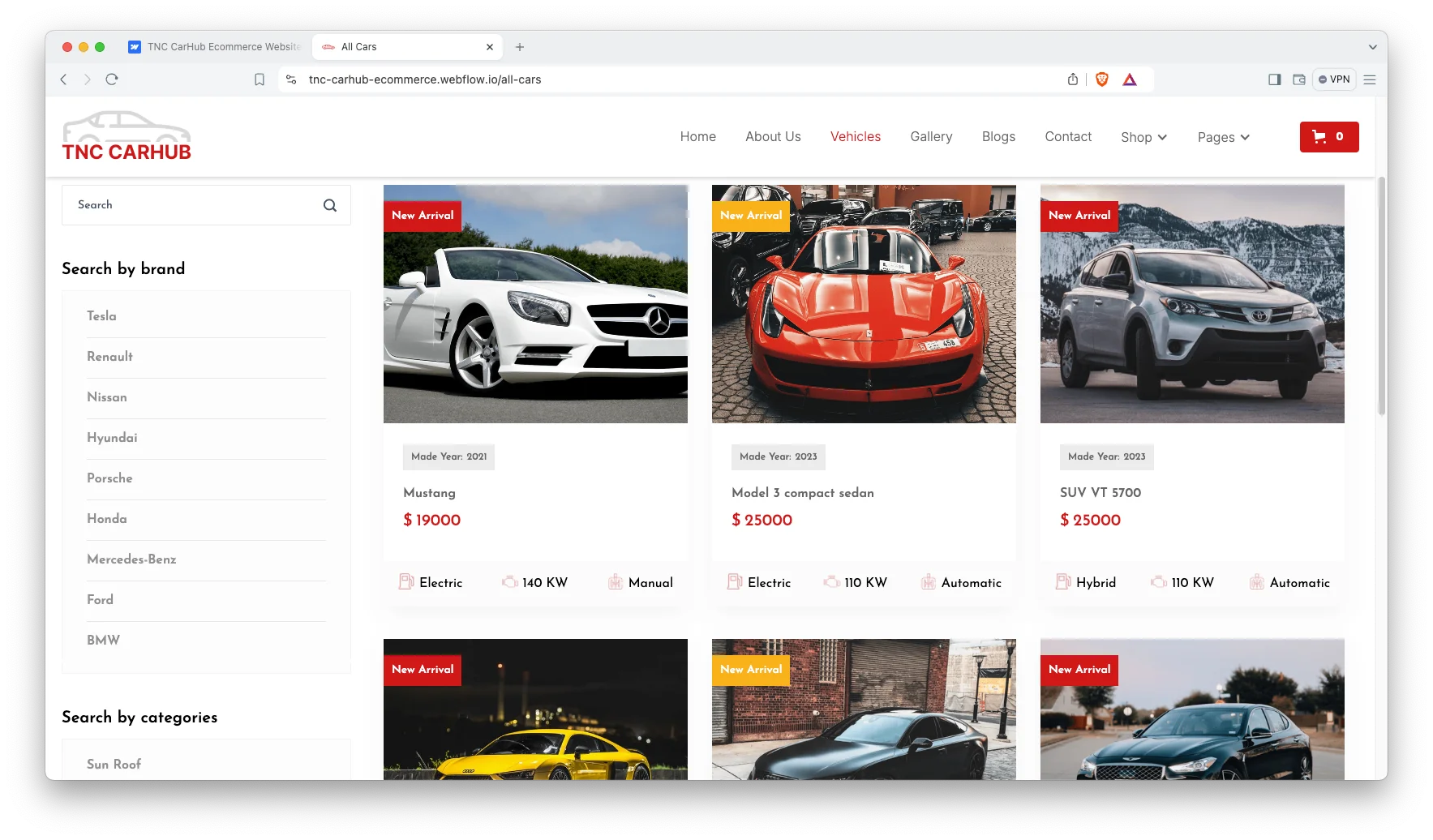
TNC CarHub is built that way. The Vehicles page carries a keyword search, a brand list and a category list. Every card shows the year, the price, the fuel type, the power output and the transmission. Then the detail page expands the specification and offers a direct contact route.
One honest point about scope. The ecommerce build sells parts and accessories through a real checkout. Vehicles are not checkout items, so a car listing ends in an inquiry rather than a card payment. That matches how most dealers actually sell.
Key Features of TNC CarHub
Featured vehicles on the home page. The home page opens with a wide showcase of highlighted stock. Photography runs edge to edge at three different heights. So the page reads like a showroom rather than a spreadsheet.
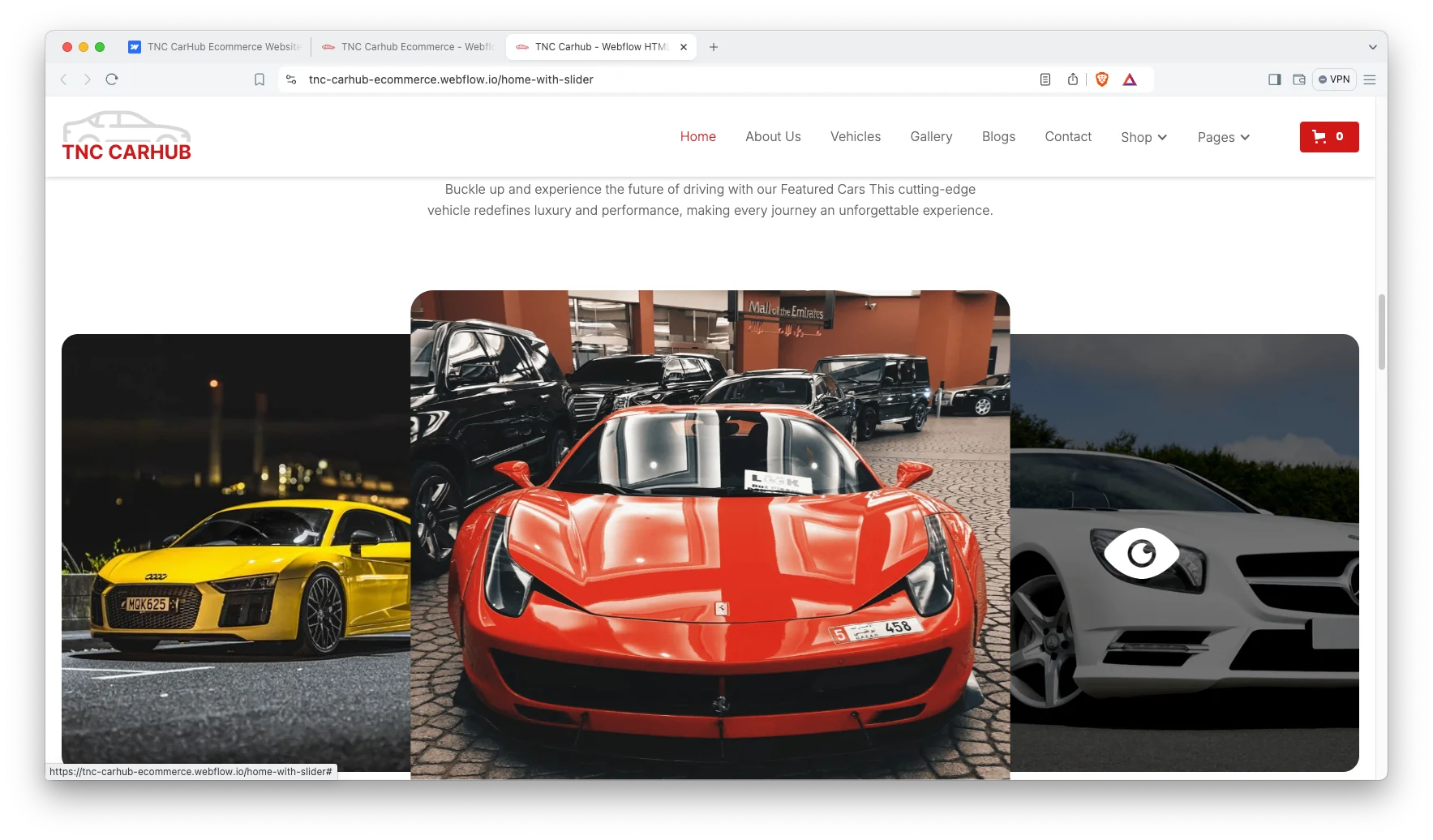
Vehicle listings with filters. The Vehicles page pairs a keyword search with a brand list and a category list. Each card carries the model year, the price, the fuel type, the power output and the transmission.
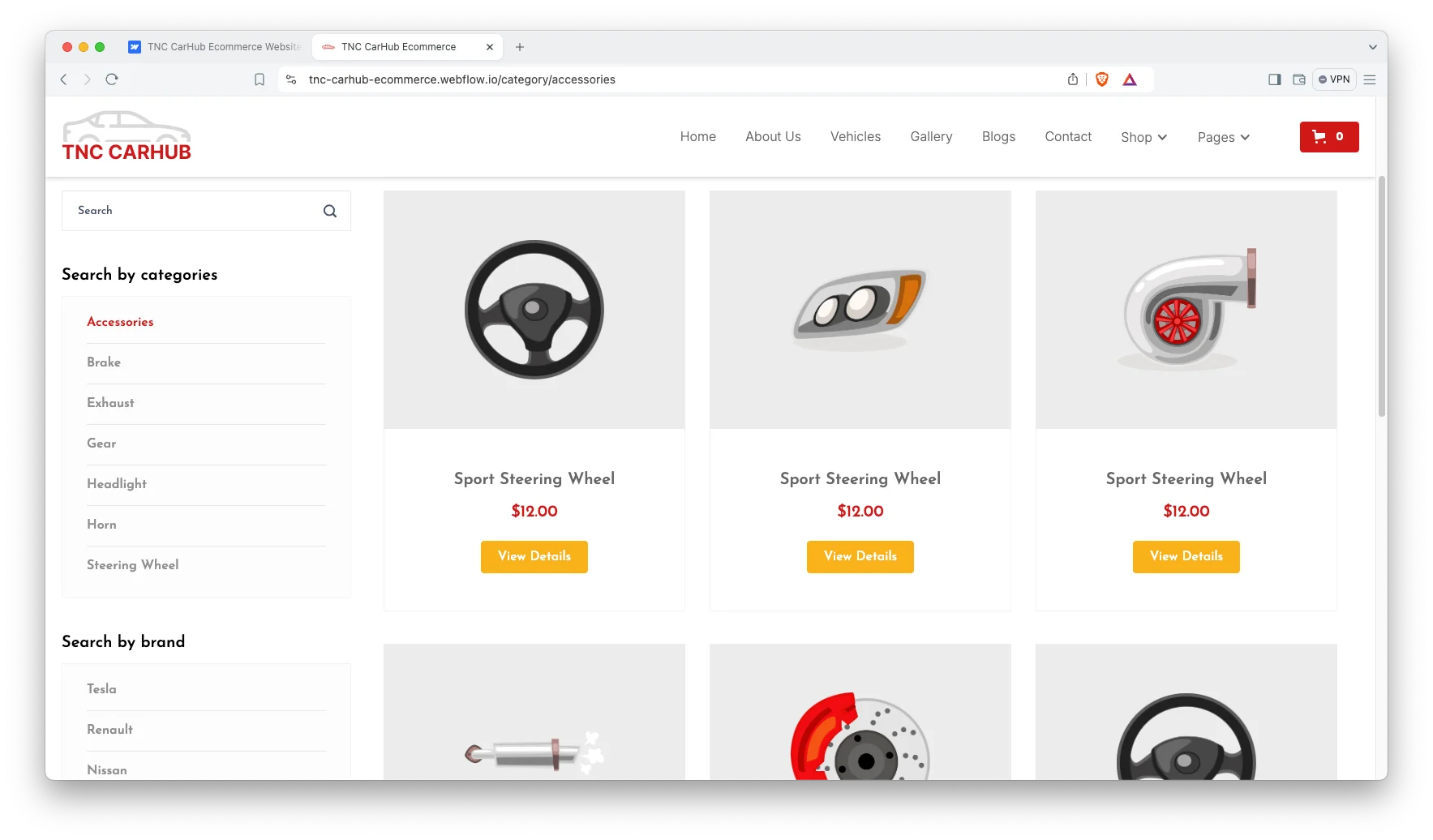
Parts shop in the ecommerce build. The shop lists accessories, brakes, exhausts, gears, headlights, horns and steering wheels. Every product has a price, a detail page and an add to cart button, with checkout and PayPal behind it.
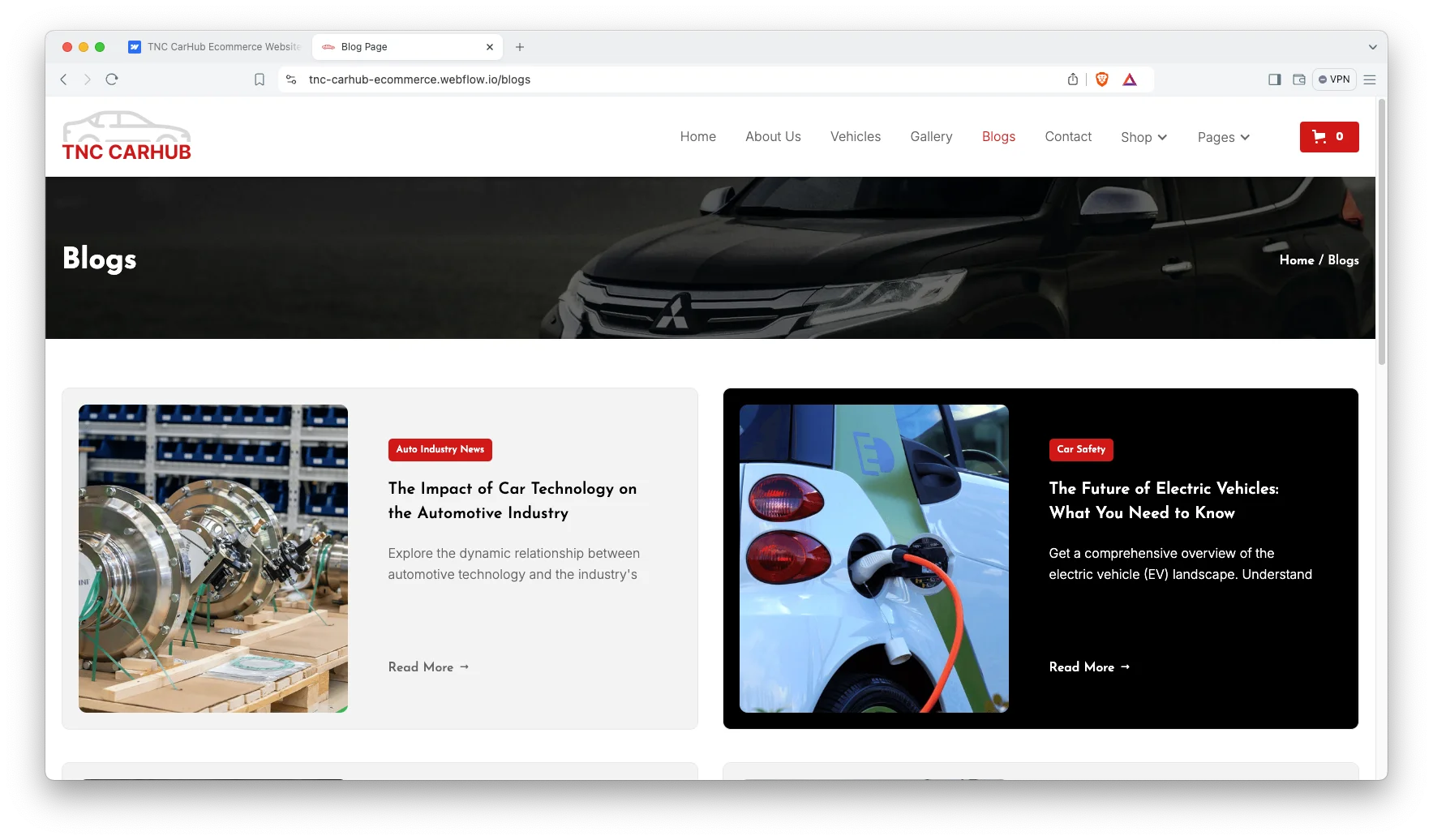
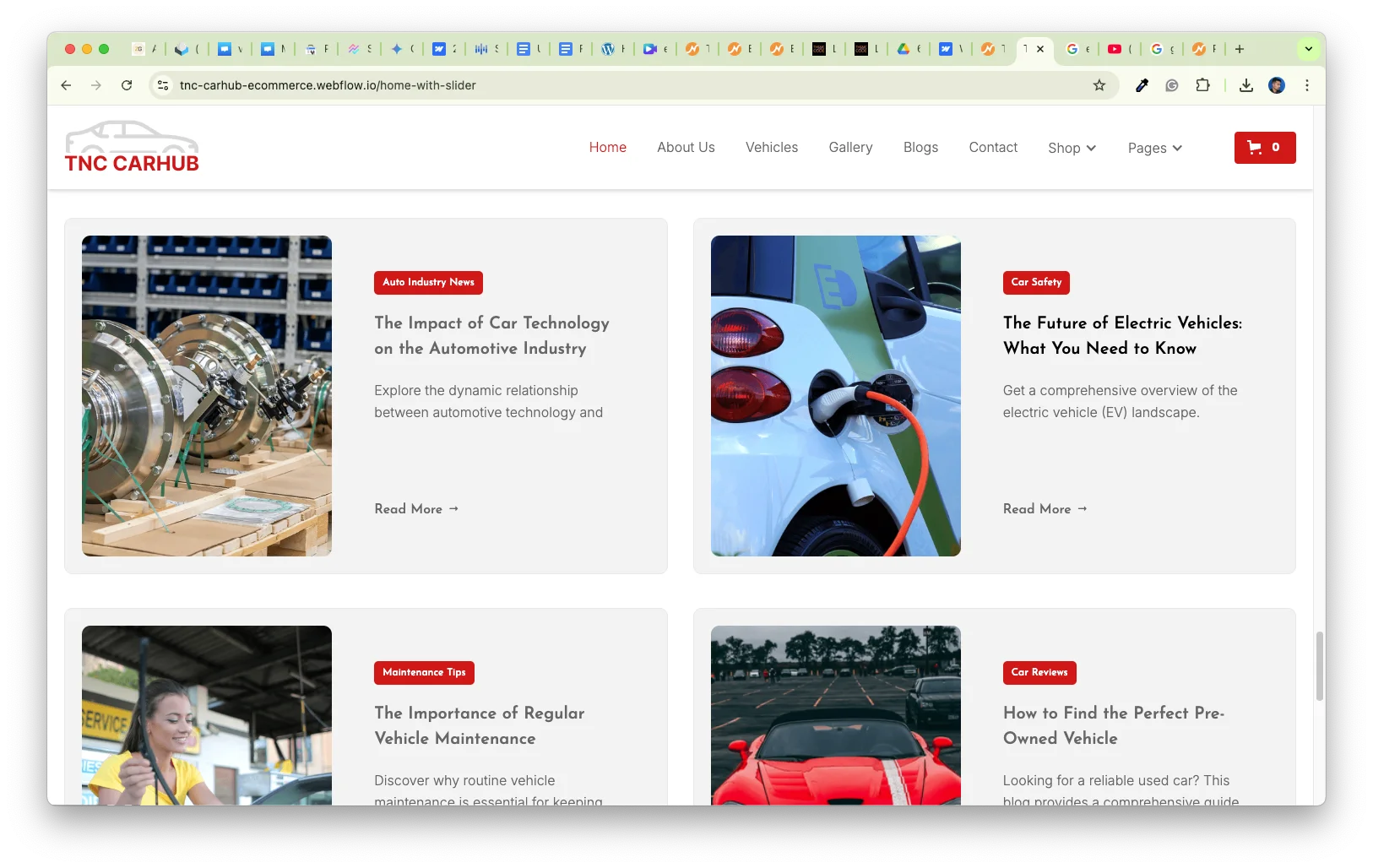
Blog with category chips. Articles arrive as cards with a colored category label, such as Auto Industry News, Car Safety, Maintenance Tips or Car Reviews. So a reader looking for maintenance advice is not buried in industry news.
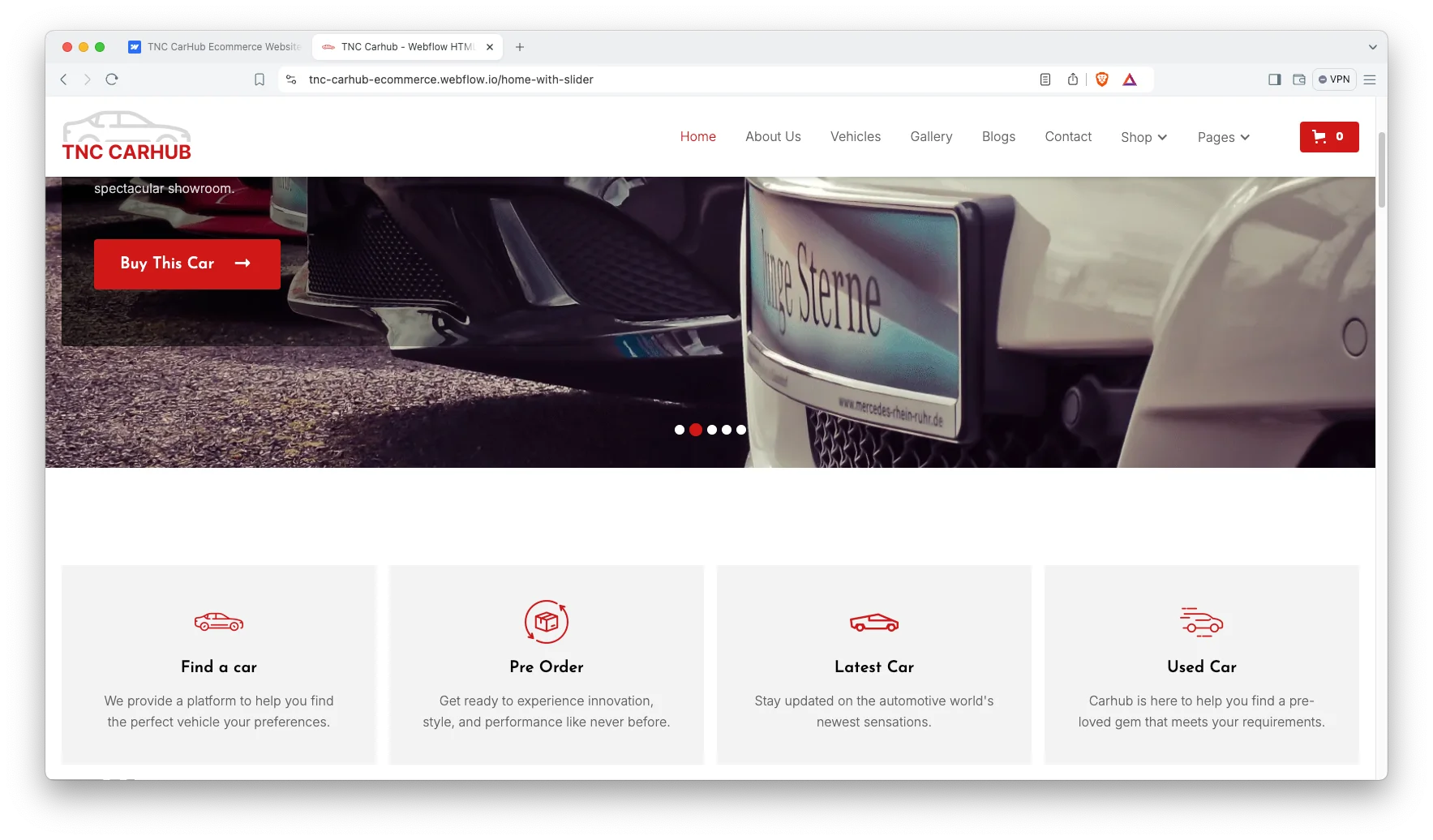
Hero slider and service tiles. The ecommerce build opens on a five slide hero with a direct call to action. Underneath it, four tiles split the offer into Find a car, Pre Order, Latest Car and Used Car.
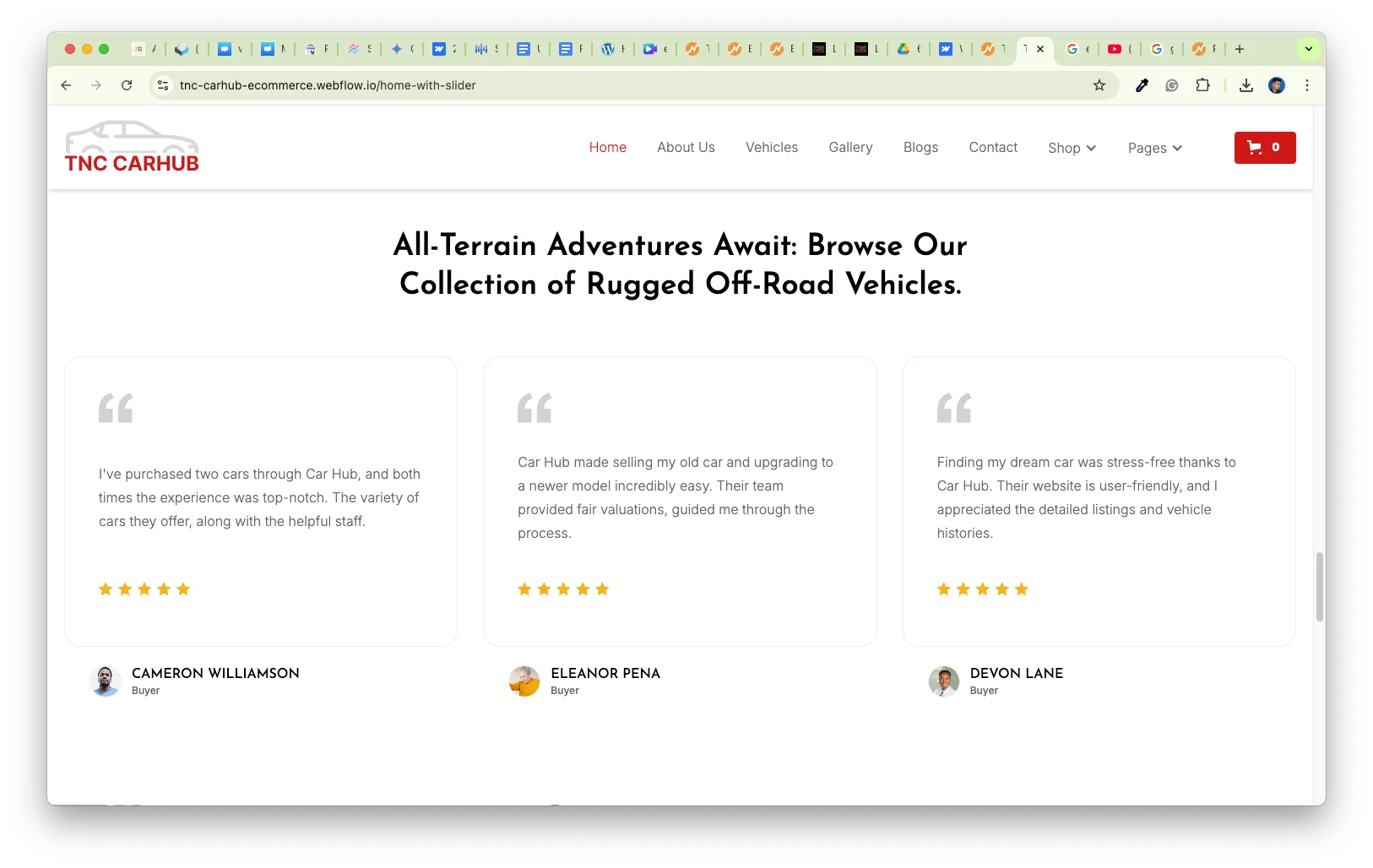
Testimonials with star ratings. Each testimonial card carries a quote, a five star rating, a portrait and the buyer’s name. Because a used car is a trust purchase, this section earns its place near the top.
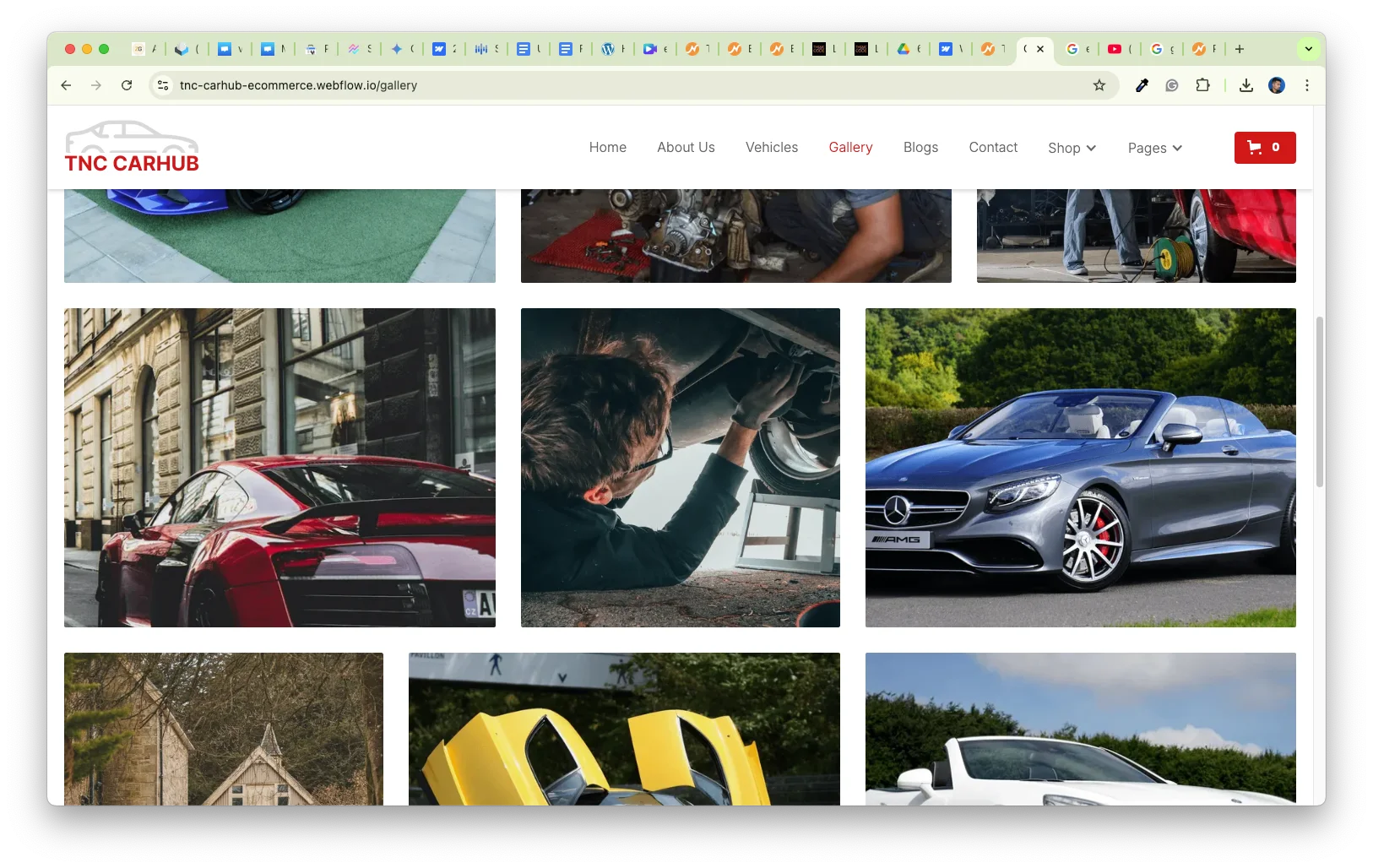
Gallery page. The gallery runs a masonry grid of vehicles and workshop photography. That way you can show the premises and the people, not only the stock.
Latest articles on the home page. A blog preview block sits near the foot of the home page. It pulls the newest articles from the CMS, so the home page keeps changing without any manual editing.
Watch on YouTube
Watch the walkthrough if you prefer the condensed version. The video moves through the home page, the vehicle listings and the shop.
Pages Included in TNC CarHub
- Home
- About Us
- All Cars
- Gallery
- Testimonials
- Blogs
- Contact Us
- 404
- Style Guide
- Licenses
- Change Log
You also receive seven CMS templates: Cars, Car Brands, Car Categories, Blogs, Blog Categories, Blog Tags and Authors. The ecommerce build adds five more: Product, Product Category, Checkout, PayPal Checkout and Order Confirmation.
How to Use TNC CarHub
- Use the purchase widget on the right side of this page to buy the TNC CarHub template
- Then follow the steps to prepare your site
- Replace the demonstration stock with your own vehicles and photography
- Adjust the design if you want
- Finally preview and publish
TNC CarHub Frequently Asked Questions
What is the difference between the CMS and Ecommerce builds?
The CMS build covers inventory, the blog and inquiries. The ecommerce build adds a parts shop with a cart, a checkout and PayPal. Both share the same design.
Can visitors filter vehicles by brand?
Yes. The Vehicles page carries a brand list, a category list and a keyword search. Brands and categories are CMS collections, so you define the ones you actually stock.
Can I sell cars online through TNC CarHub?
Not through checkout. Vehicles are CMS listings, so a car page ends with a contact or inquiry action. However, the ecommerce build does sell parts and accessories with real card and PayPal payment.
Is the Figma file included when I buy the Webflow template?
No. The Figma file is a separate product with its own price. Use the purchase widget on this page to buy it on its own, or alongside the Webflow build.
Which pages come with TNC CarHub?
Eleven designed pages and seven CMS templates. The ecommerce build adds five more for products, categories, checkout, PayPal checkout and order confirmation.
Does TNC CarHub include a blog?
Yes. The blog is a CMS collection with categories, tags and authors. Articles appear on the Blogs page and in a preview block on the home page.
When you choose TNC CarHub, you also receive assistance from the TNCFlow support team. So if something breaks during installation, contact us.
Check out other Webflow templates by TNCFlow.


Select template
Choose one or more options for your build
All-Access Pass
$199
/ Yearly
$20,000+ in assets
130+ Webflow Templates
130+ Figma UI Templates
45+ Framer Templates
130+ HTML Templates
