

PRO
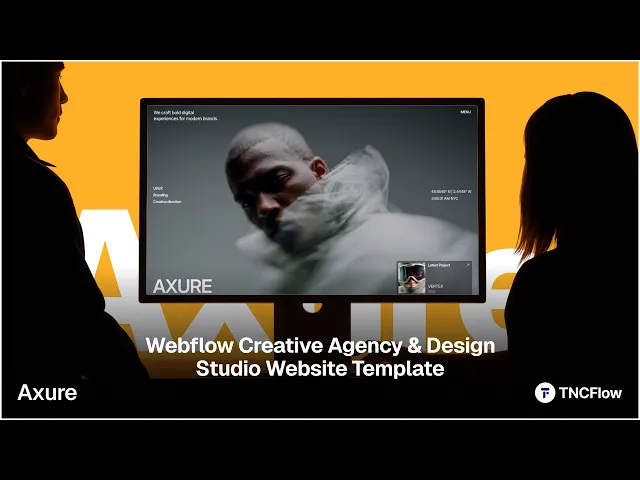
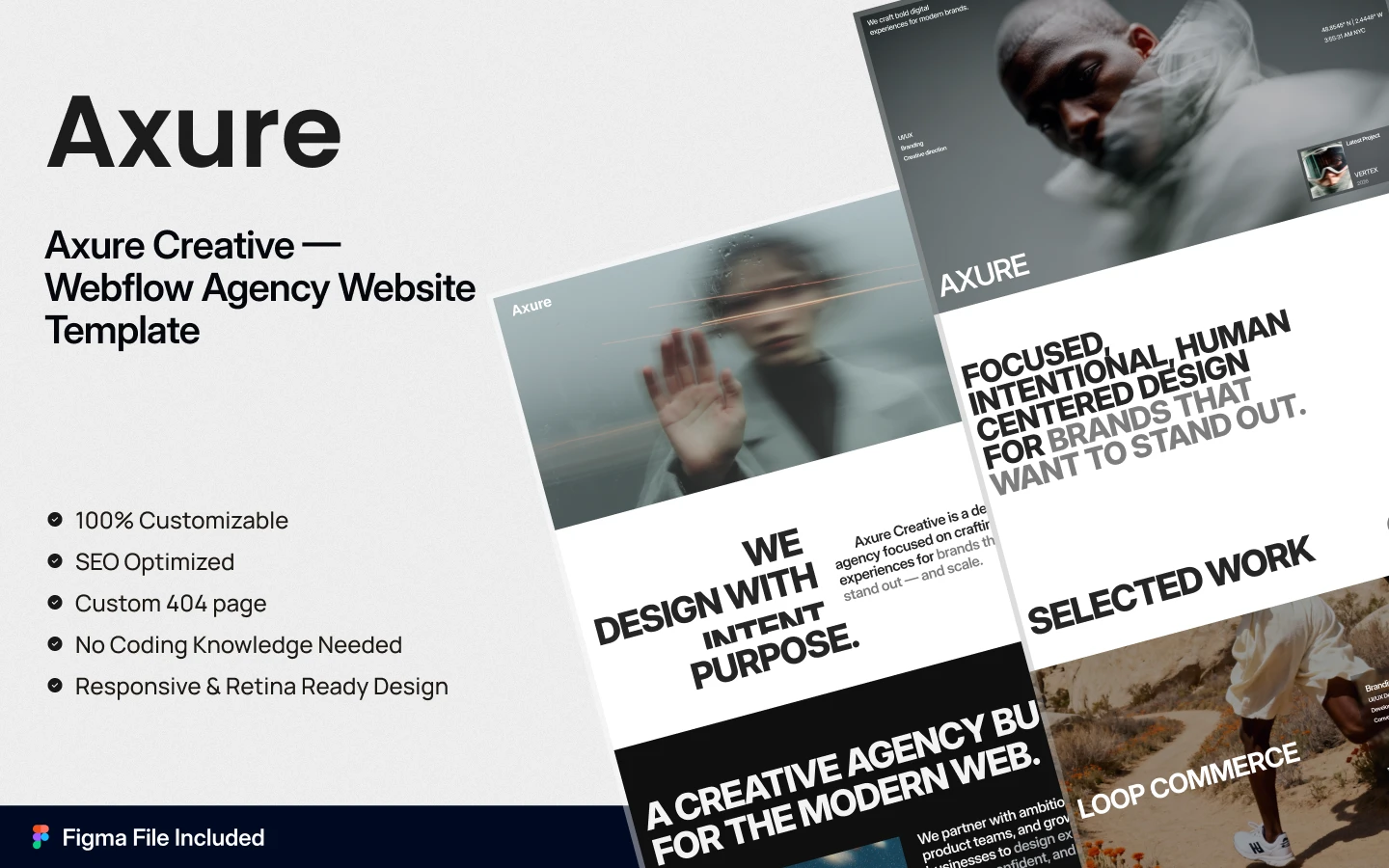
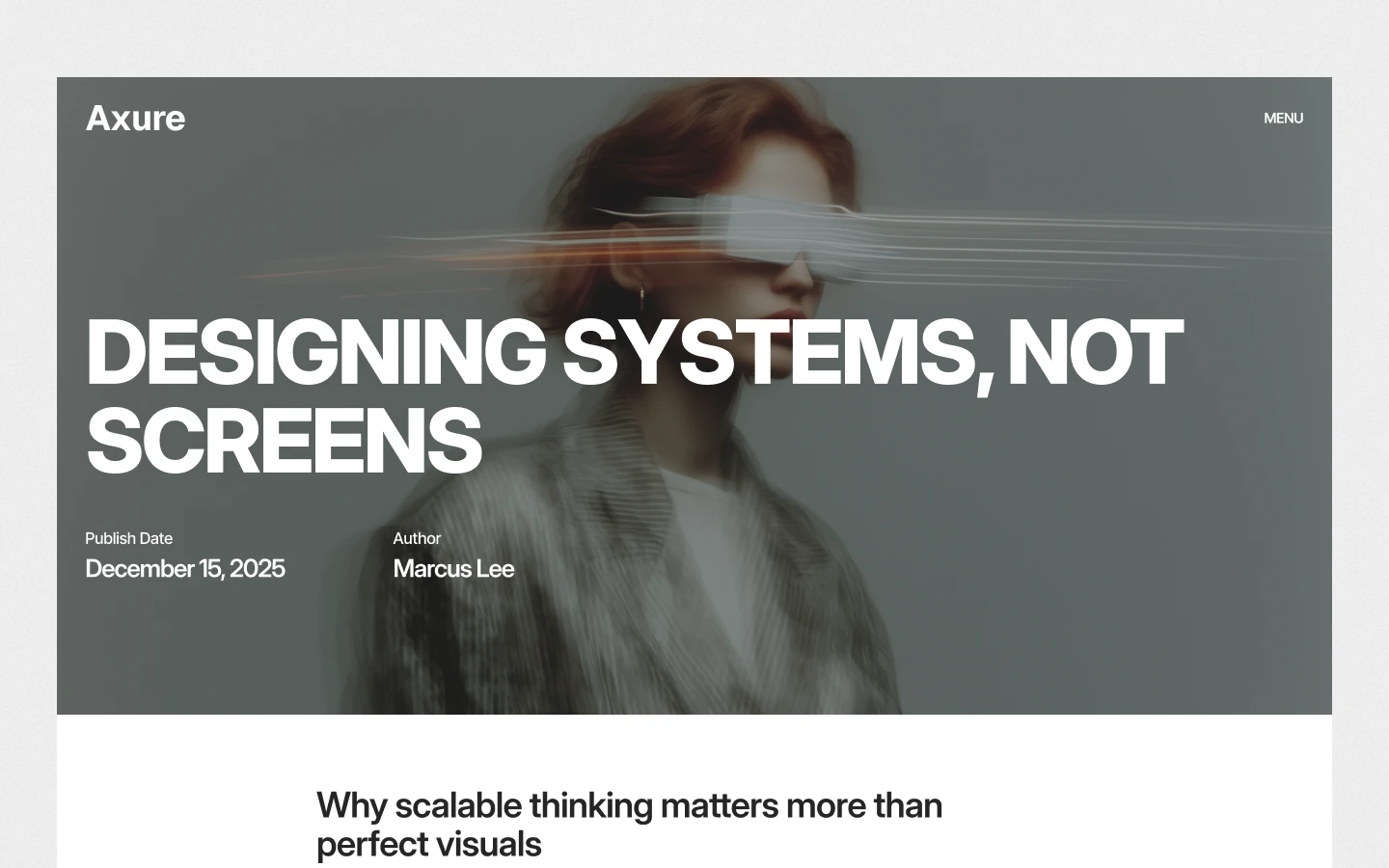
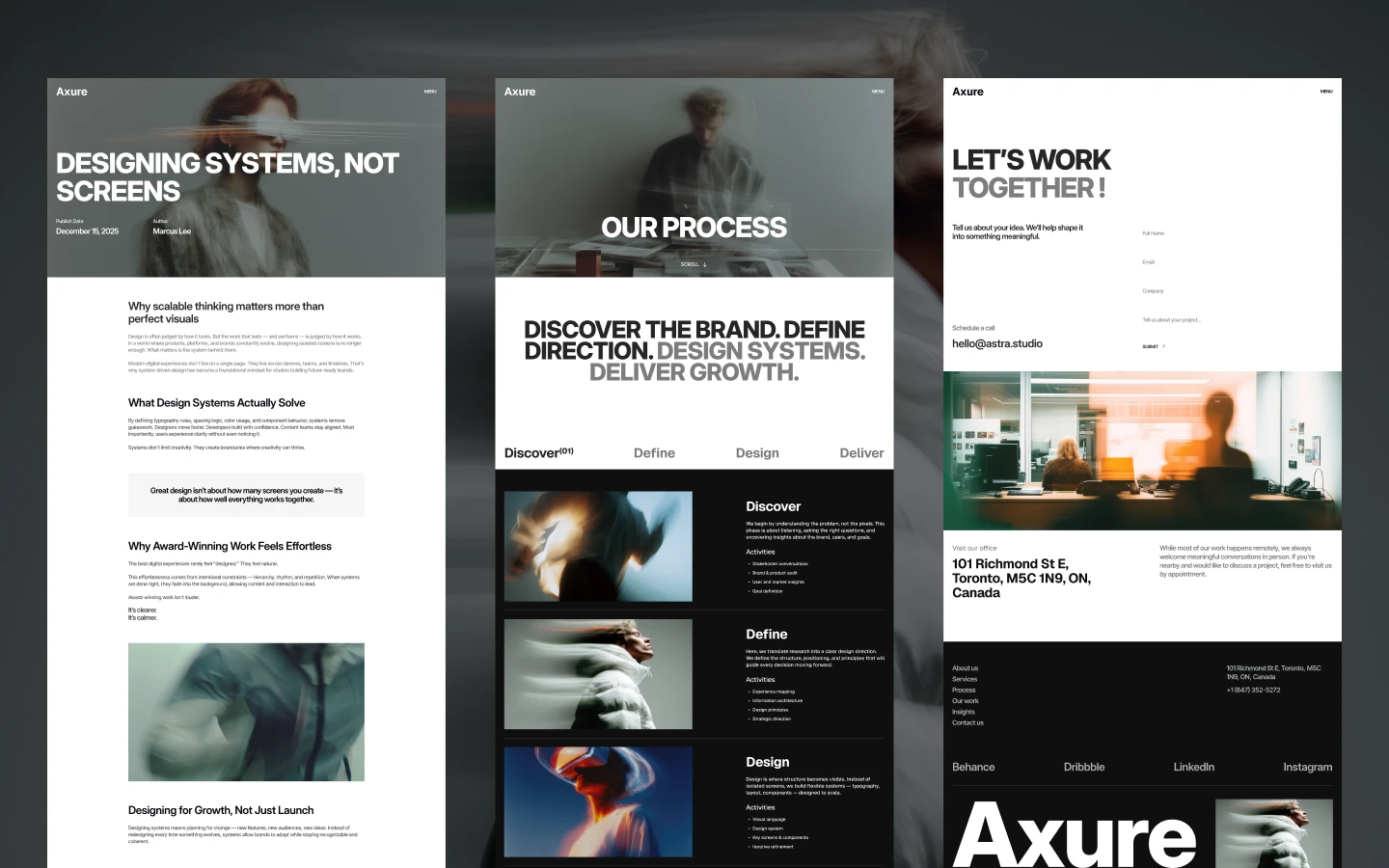
Axure is a portfolio website template for creative agencies, design studios and freelance designers. It ships for Webflow, Framer, Figma and HTML.
Axure gives your project work room to breathe, so the layout stays quiet while the photography carries the page. Each case study opens with a wide project image. Then it adds a short narrative, and finally the measurable result.
Every section has a single job. The hero states your positioning, the work grid proves it, and the process page explains your delivery method. Finally, the contact page closes the loop with minimal friction.
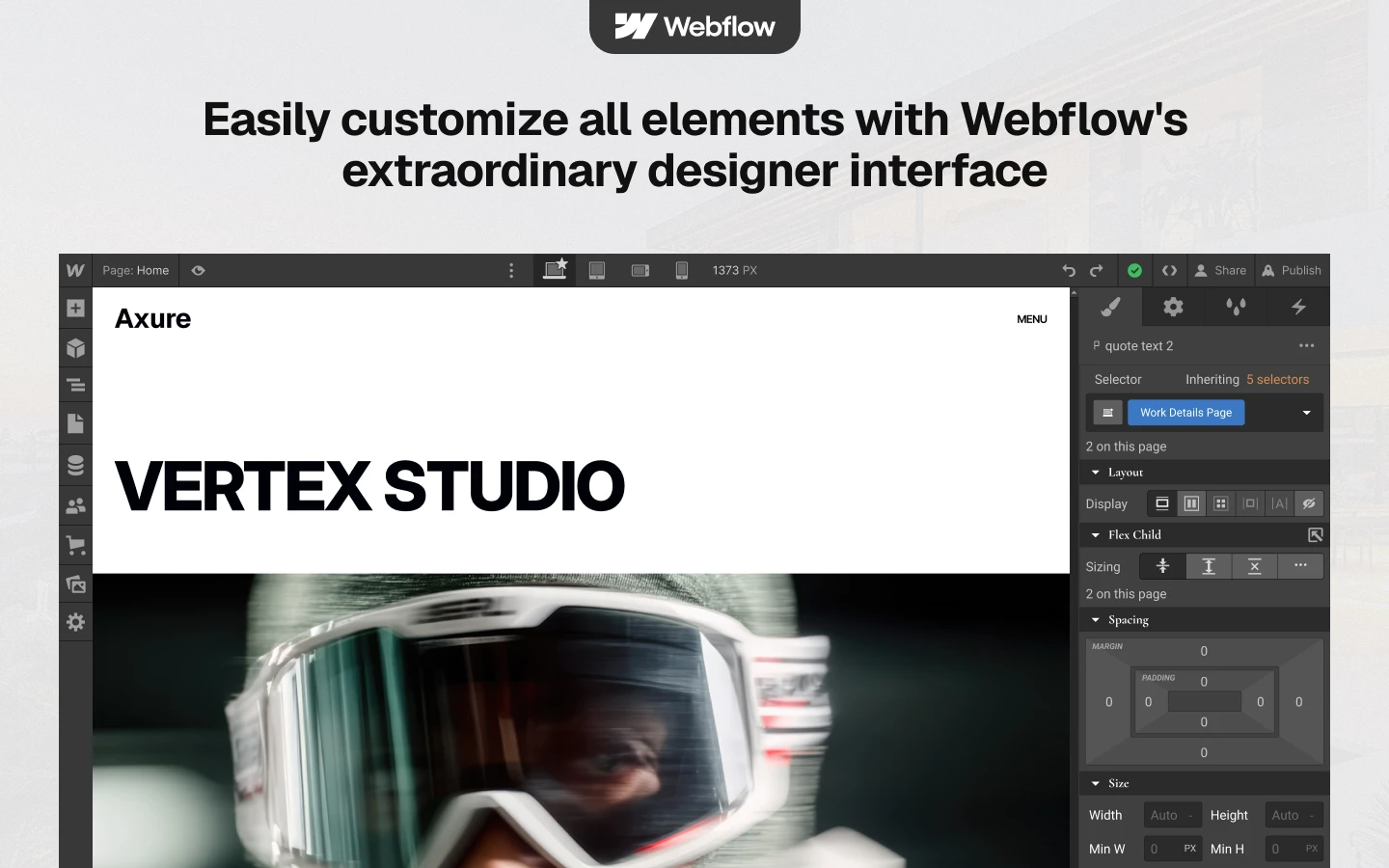
You can build in four formats. The Webflow version ships with a CMS, so projects, categories and blog posts are editable in the editor. The Framer and HTML versions mirror the identical design. The Figma file keeps every layer named and grouped for redesign work.
Explore the live preview now!
Axure at a Glance
| Formats | Webflow, Framer, HTML, Figma |
| Best for | Creative agencies, design studios, freelance designers, product studios |
| CMS | Webflow CMS for projects, blog posts and blog categories |
| Pages | 14 total: 6 static, 3 CMS templates, 5 utility |
| Layout | Multi page |
| Responsive | Desktop, tablet and mobile breakpoints |
| Support | Direct help from the TNCFlow team |
Key Features of Axure
Modern creative and portfolio design. Axure uses confident typography, soft gradients and a restrained palette, so the page reads as a genuine studio site rather than a stock layout. Because the visual noise is low, your portfolio carries the attention.

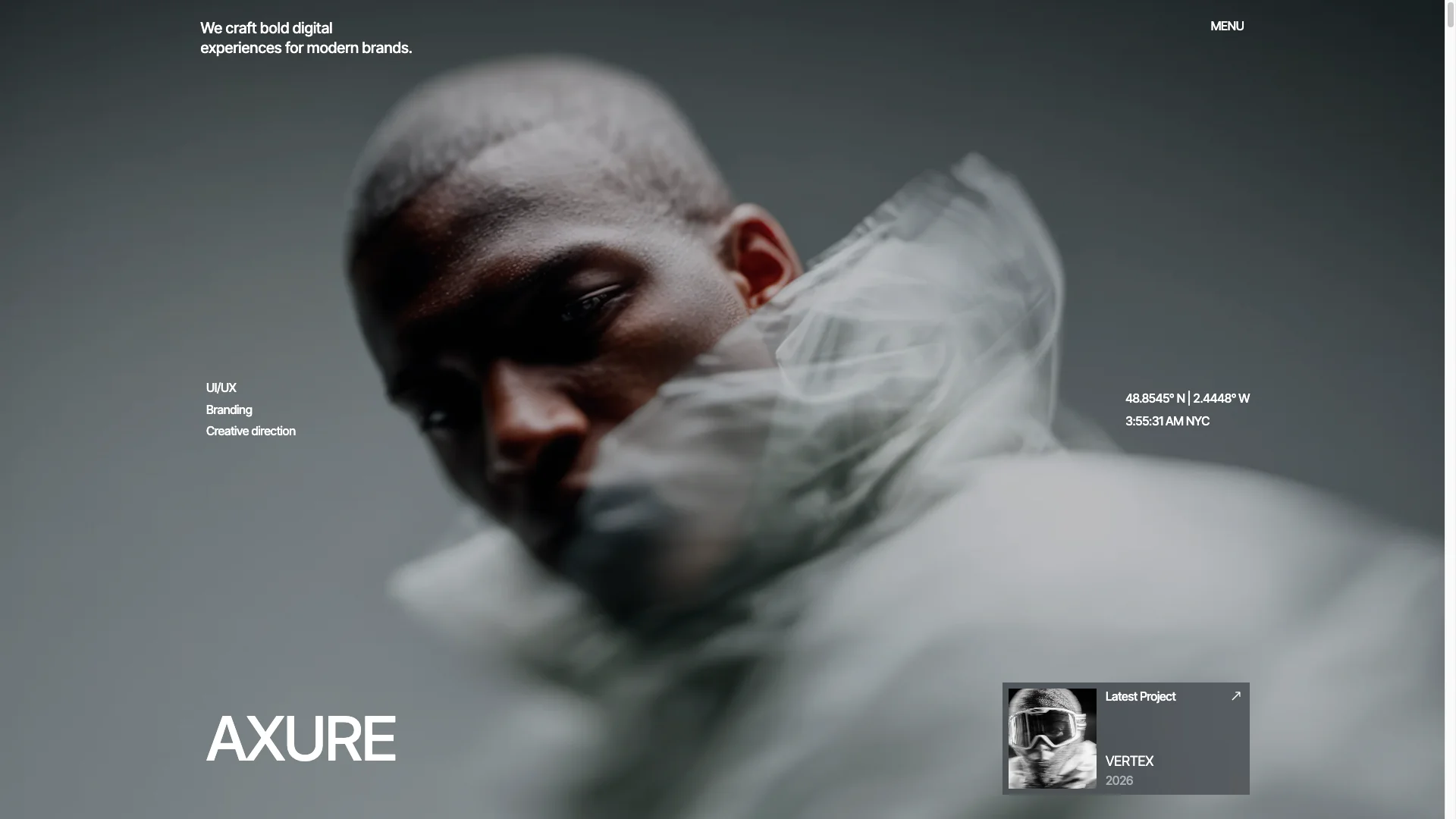
Compact gradient hero with a CTA. The homepage opens with a short headline and one primary button, which states your value proposition in a single line. Then it hands the visitor directly to the project work.
A process page that explains your method. Our Process walks through the studio workflow step by step, from discovery through delivery, so a prospect understands how a project actually moves. That answers the question most agency websites leave unanswered.
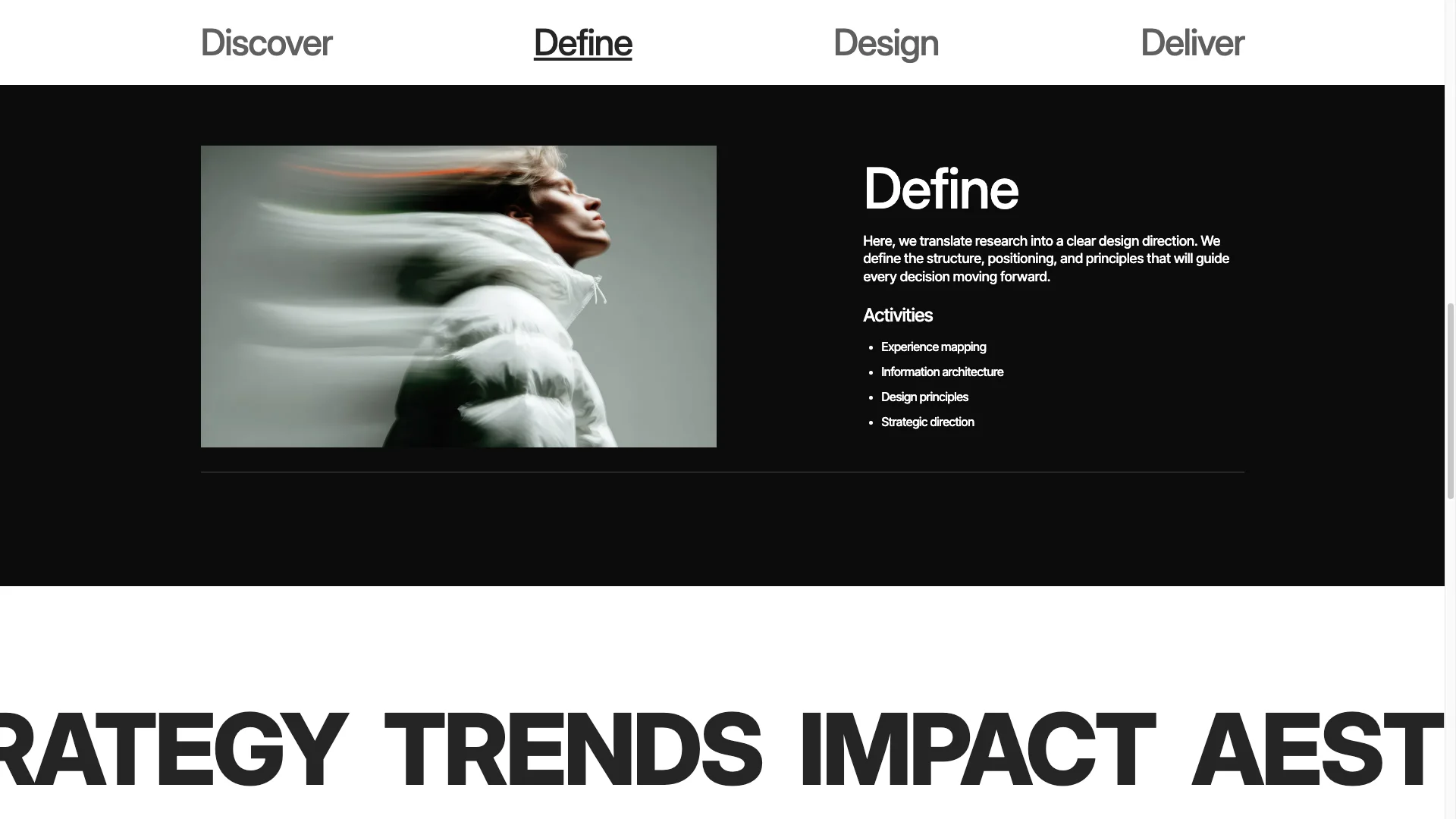
About page with mission, story and team. The About page runs in four parts: mission, studio story, team grid and a short “How We Work” block. You can add an introduction video, while the timeline explains your workflow in three steps.
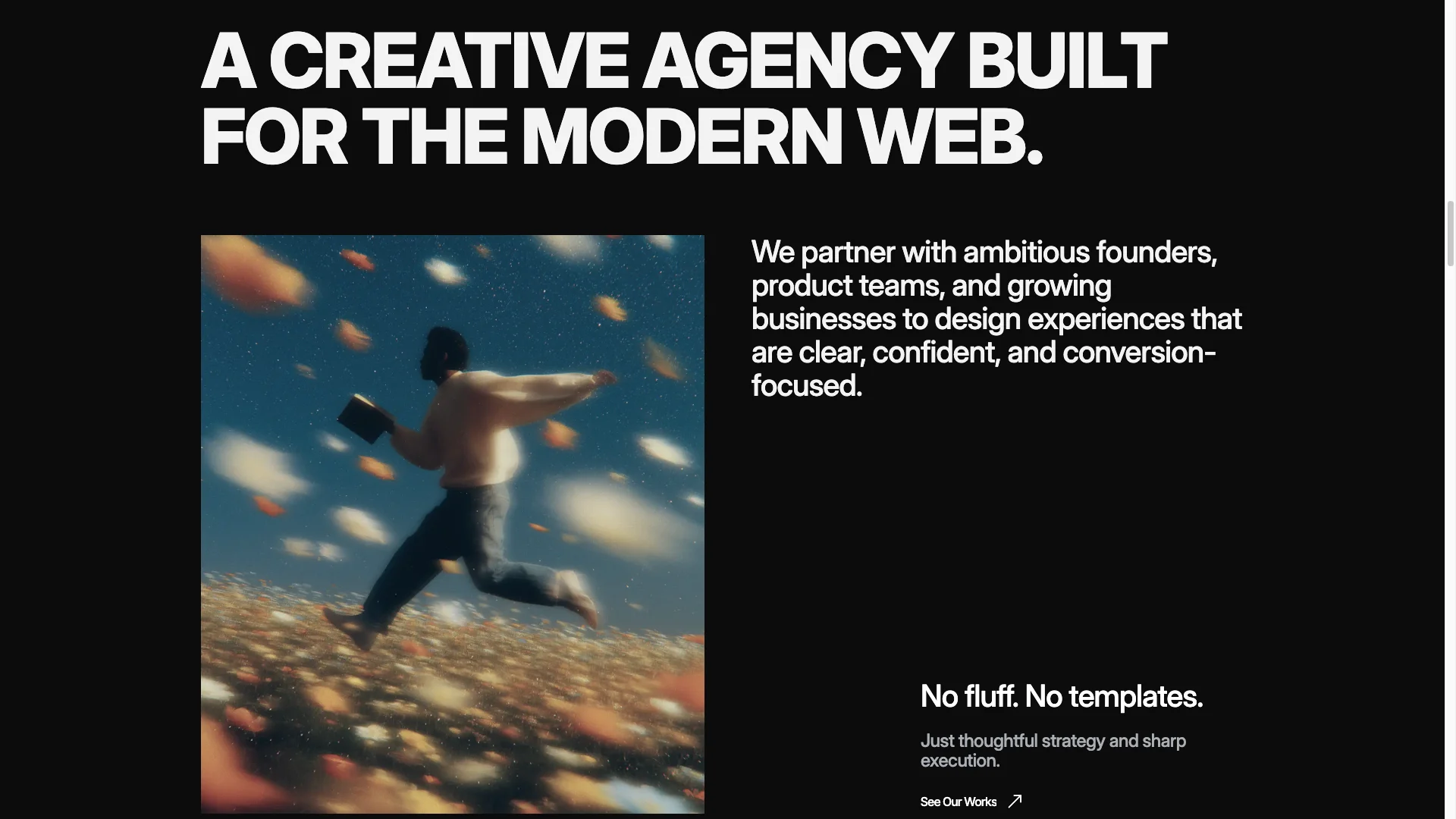
CMS blog for design writing. The blog is CMS driven, with a category system already wired up, so you can publish design notes and client stories without opening the Designer. That compounds into organic search traffic over time.

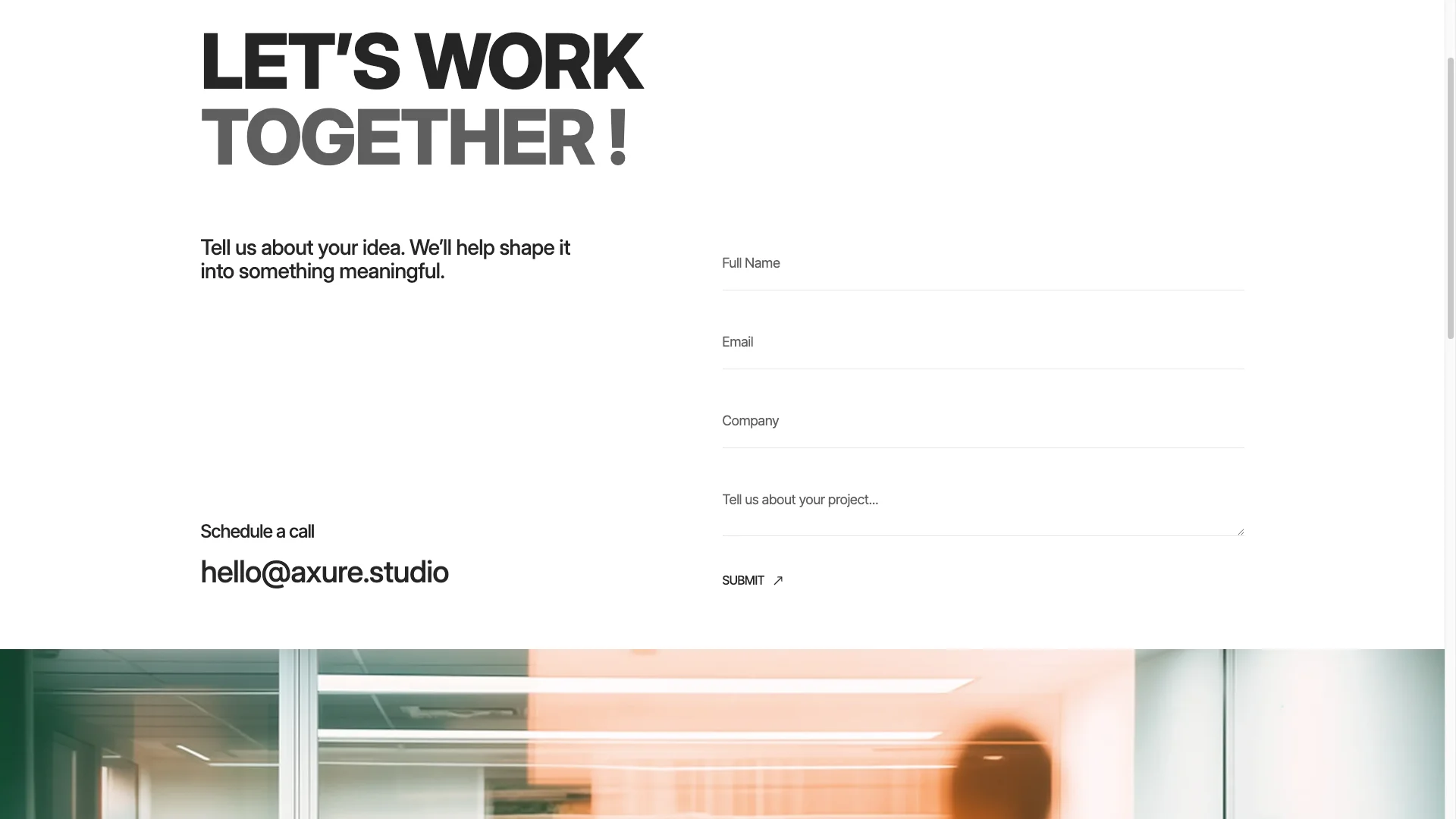
Contact and inquiry page. The contact page pairs a short form with your business details and social links. Fewer fields generally mean fewer abandonments, so more qualified inquiries reach your inbox.
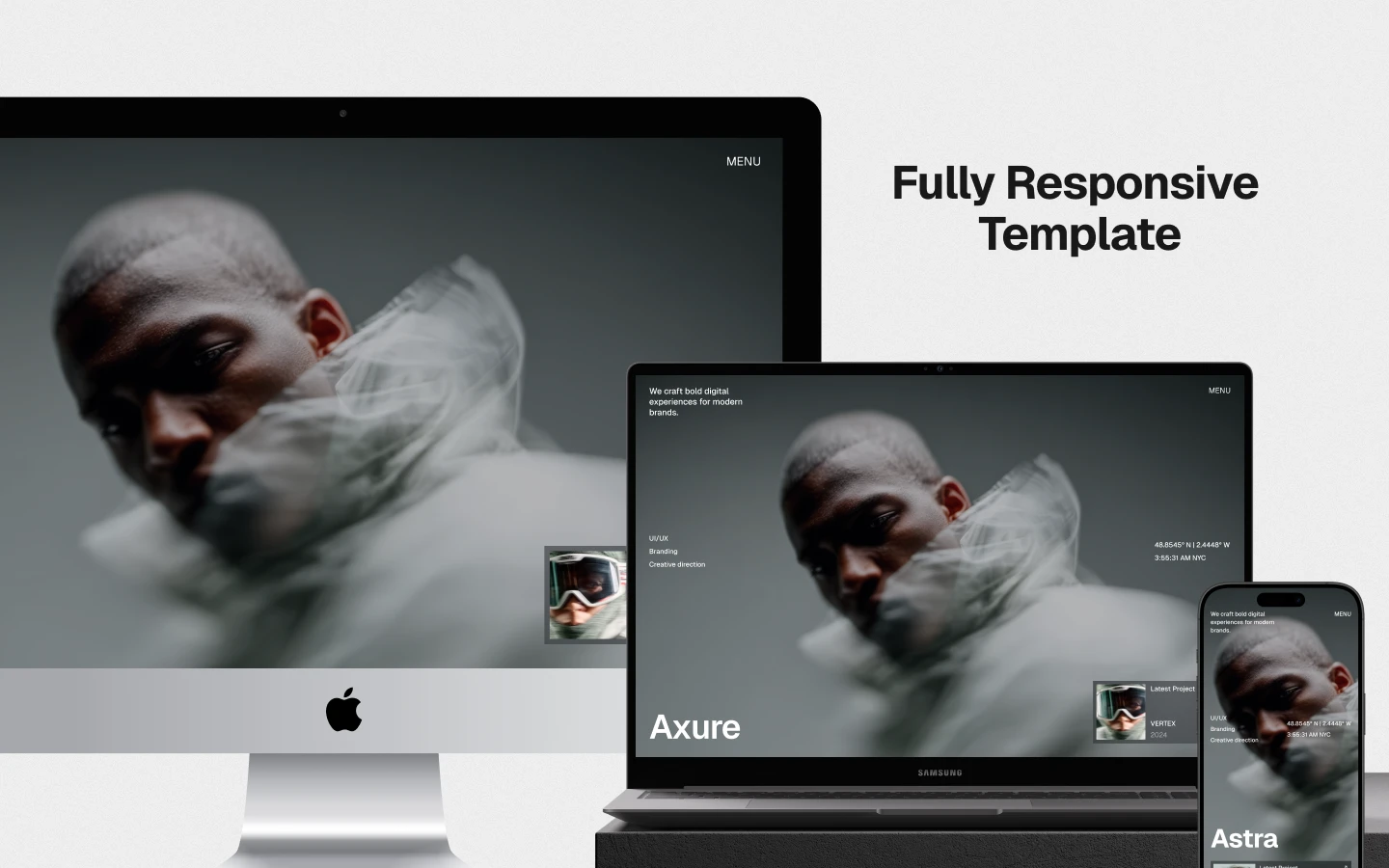
Responsive on every breakpoint. Every page is laid out for desktop, tablet and mobile, and the hero, project grid and testimonial row all reflow cleanly. So your website stays readable on a phone.
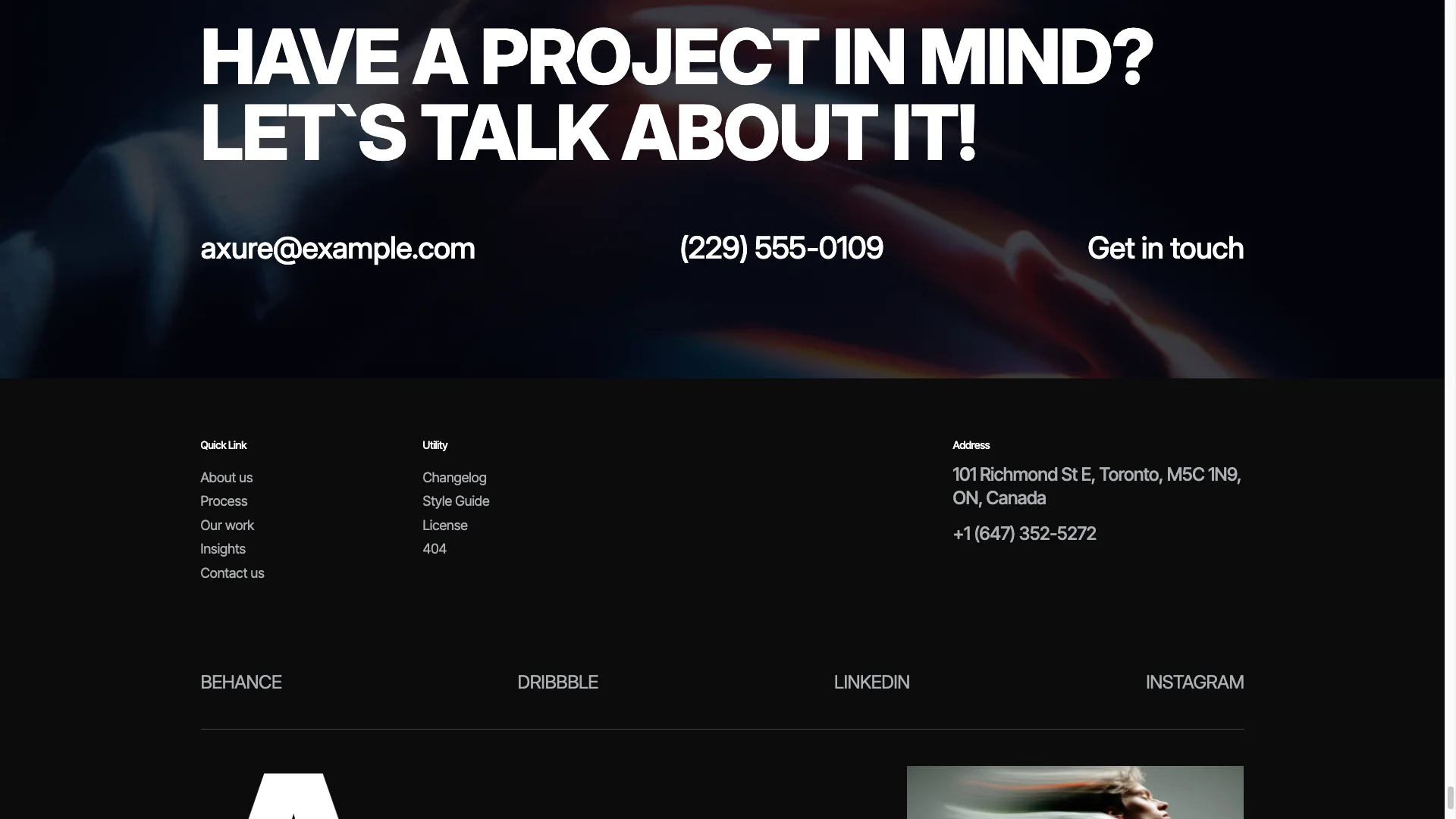
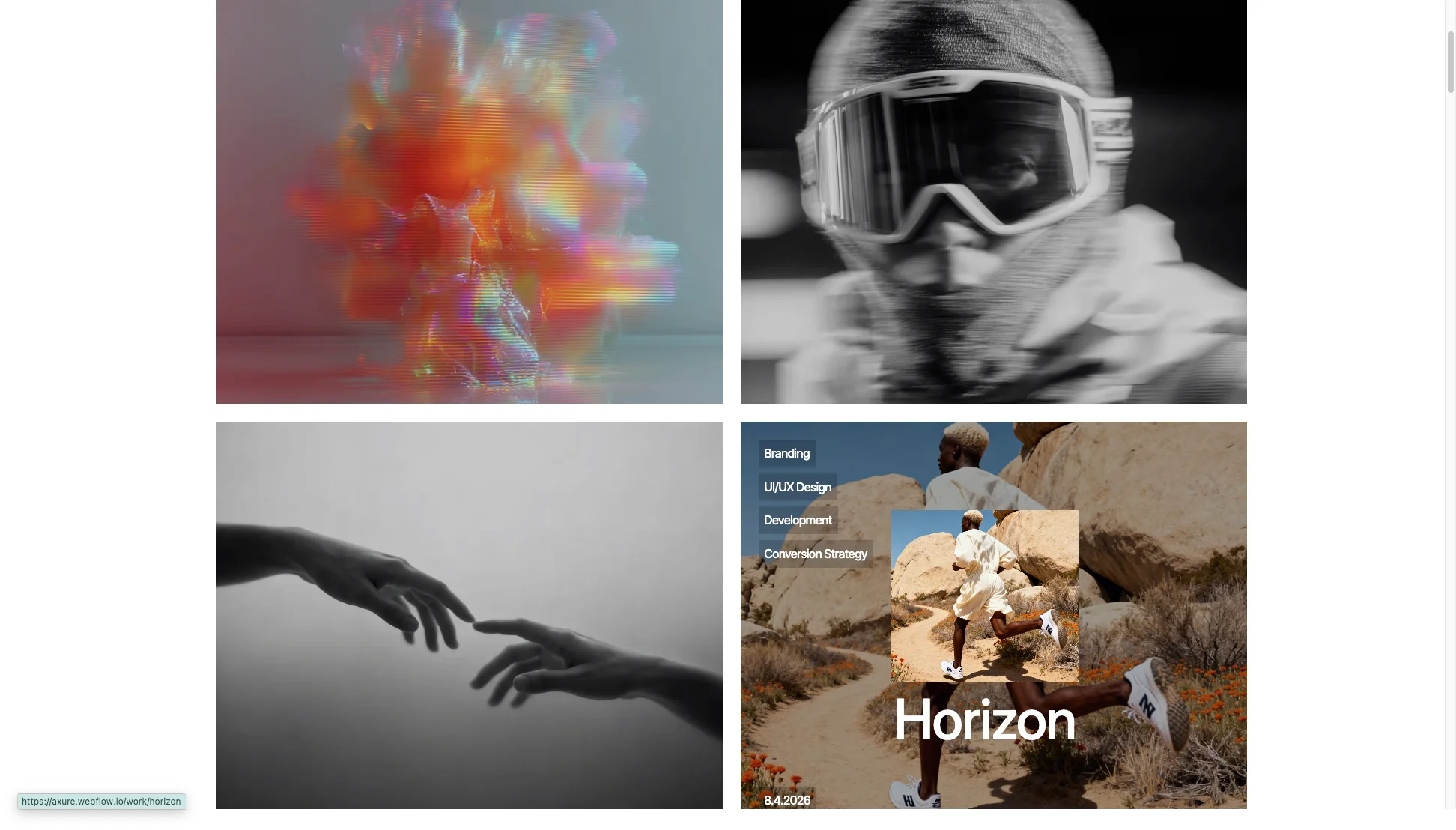
Filterable work grid. The Works Grid page pulls from the CMS collection and supports filtering, so you can separate branding, product and web projects inside one view. Visitors then find the work that matches their brief.
Testimonial showcase. The testimonial section accepts a photograph, a name, a role, a quotation and a client logo. Because you can link each quotation to its case study, praise becomes documented proof.

Utility pages ready to go. Axure includes a Style Guide, an Instructions page, a License page, a Changelog and a custom 404 page, so your handoff is documented before you publish.

Pages Included in Axure
Axure contains fourteen pages altogether. Six are designed static pages: Home, About, Our Process, Works Grid, Blog and Contact. Three are CMS templates: a work item page, a blog post page and a blog category page. Five are utility pages: Style Guide, Instructions, License, Changelog and the 404.
How to Use Axure
- Choose the format you want, then complete the purchase.
- Use the purchase widget on the right side of this page to buy the Axure template
- Open the Webflow version in the Designer, or open the Framer, HTML or Figma files in their own applications.
- Swap the logo, colors and typography for your own brand.
- Replace the sample projects with your case studies through the CMS collection.
- Check every breakpoint, then publish.
What Makes a Portfolio Website Template Work
Buyers judge a design studio in seconds, so the first screen has to show genuine project work rather than a slogan. Choose a template that puts a project image above the fold. Then confirm the case study page has room for process, not only a hero photograph.
Next, examine the CMS. A portfolio keeps growing, and hand coding each new project becomes expensive quickly. A dedicated collection for projects saves hours every month, and Axure ships one, so publishing new work is a form fill.
Finally, weigh the file formats. A studio that redesigns often wants the Figma source, while a studio that ships fast prefers Webflow or Framer. Axure covers both habits, which is why it suits established agencies as well as solo designers.
Frequently Asked Questions
Is Axure a Webflow or an HTML template?
Both. Axure ships as a Webflow project, a Framer project, a coded HTML build and a Figma file, so you choose the format when you buy.
Does Axure include a CMS?
Yes. The Webflow version uses Webflow CMS for projects, blog posts and blog categories, so you can publish new work without opening the Designer.
How many pages does Axure include?
Fourteen. Six designed static pages, three CMS templates and five utility pages, including a custom 404.
Is the Figma file included with the Webflow version?
The Webflow purchase includes the Figma file at no additional cost. You can also buy the Figma file separately if you only need the design.
Can I use Axure for a personal portfolio?
Yes. The work grid and case study layouts suit a solo designer as well as a studio, and you can hide the team section on the About page if you work alone.
Is Axure responsive?
Yes. Every page is built for desktop, tablet and mobile, and each section reflows at the smaller breakpoints.
When you choose Axure, you get support from the TNCFlow team. Our specialists answer setup questions quickly.
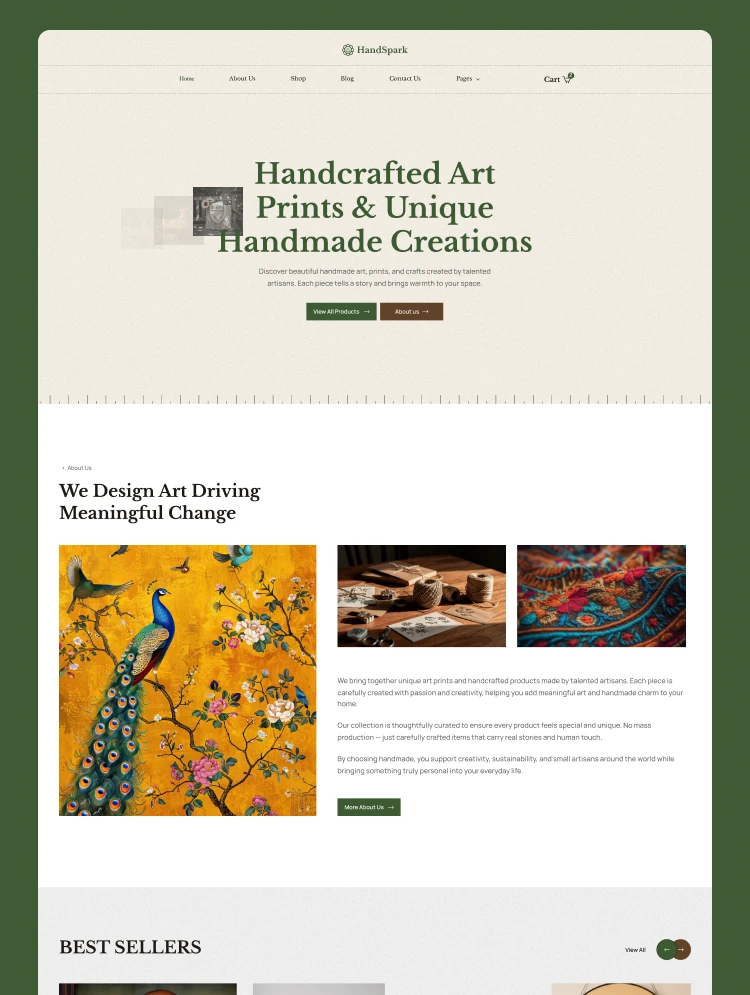
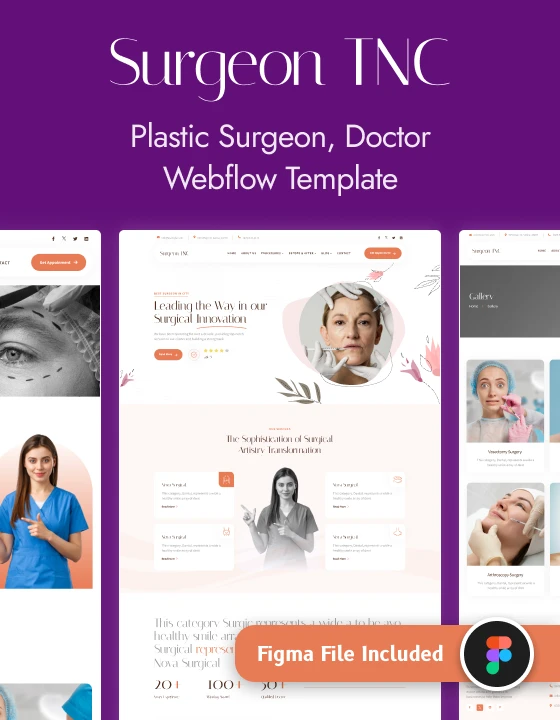
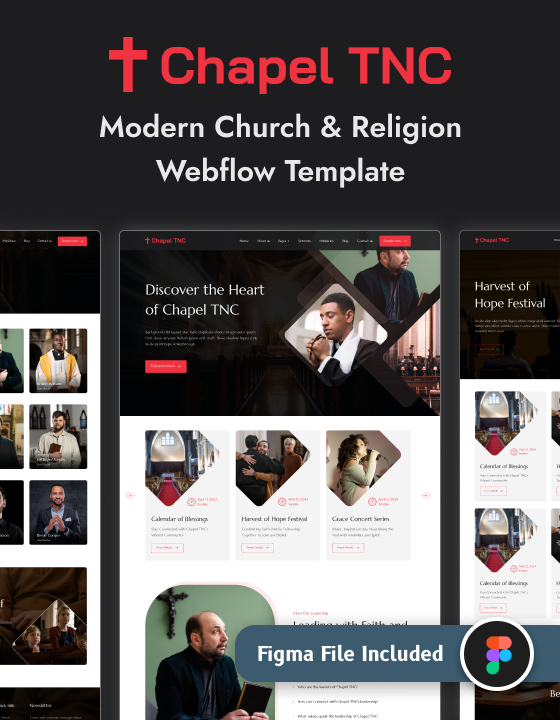
Check out other Webflow templates by TNCFlow.

Select template
Choose one or more options for your build
All-Access Pass
$199
/ Yearly
$20,000+ in assets
130+ Webflow Templates
130+ Figma UI Templates
45+ Framer Templates
130+ HTML Templates
